Tag: printing

  • ‘El pi de Son Boter’ stone litho print

    ‘El pi de Son Boter’ stone litho print

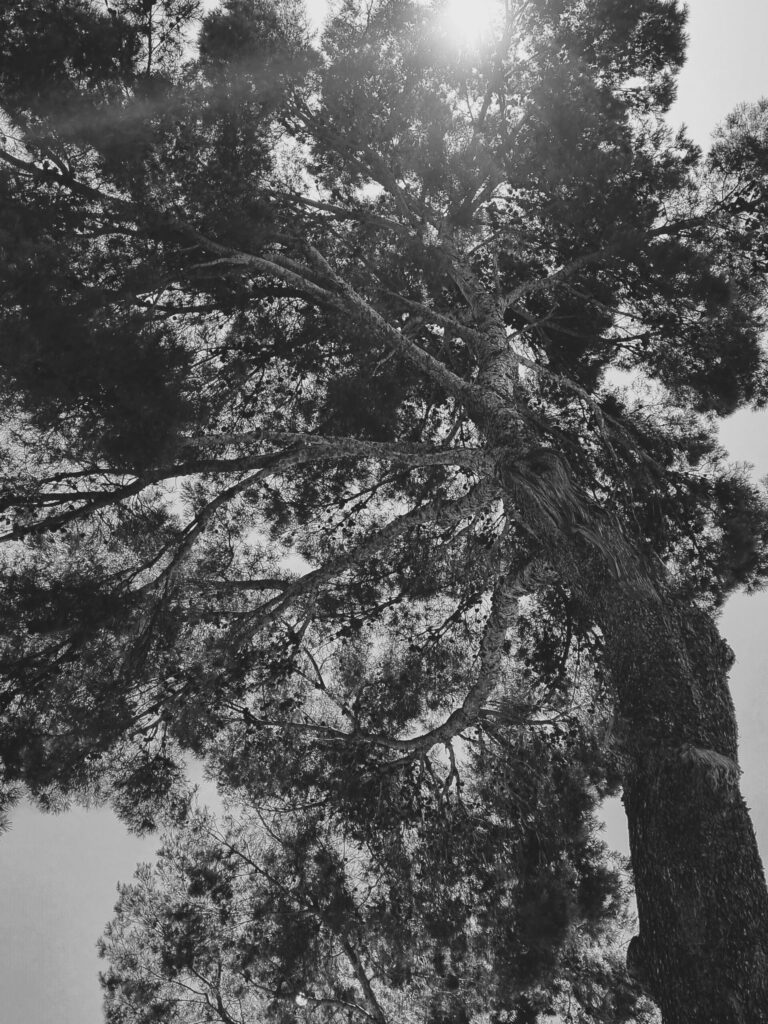
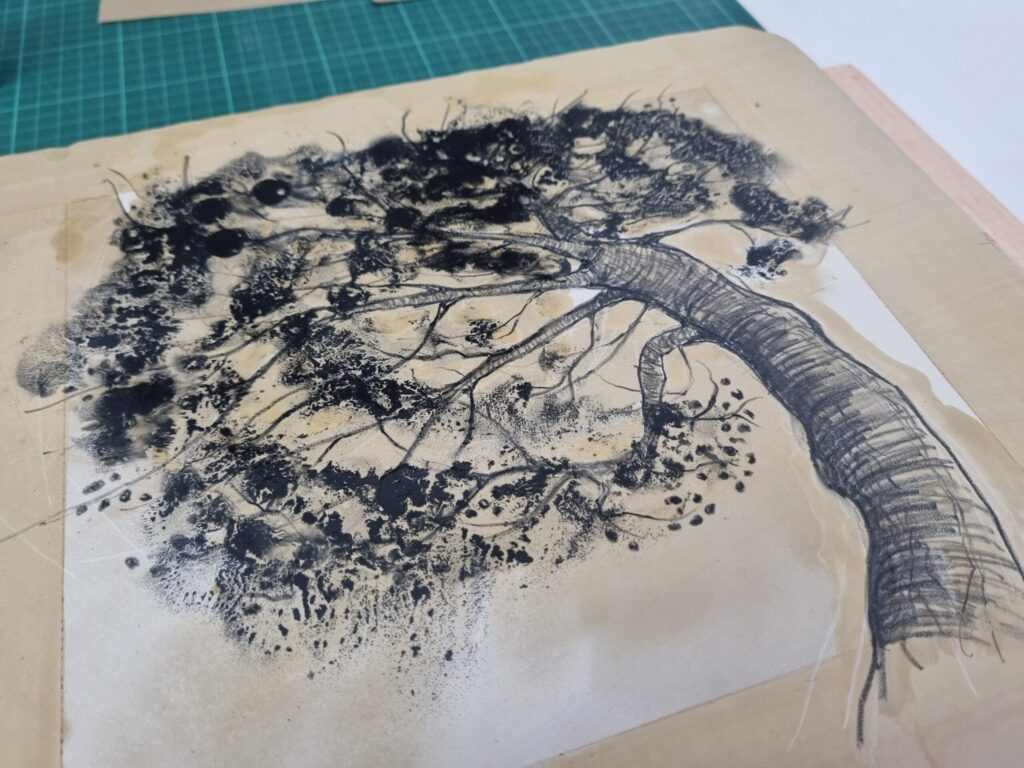
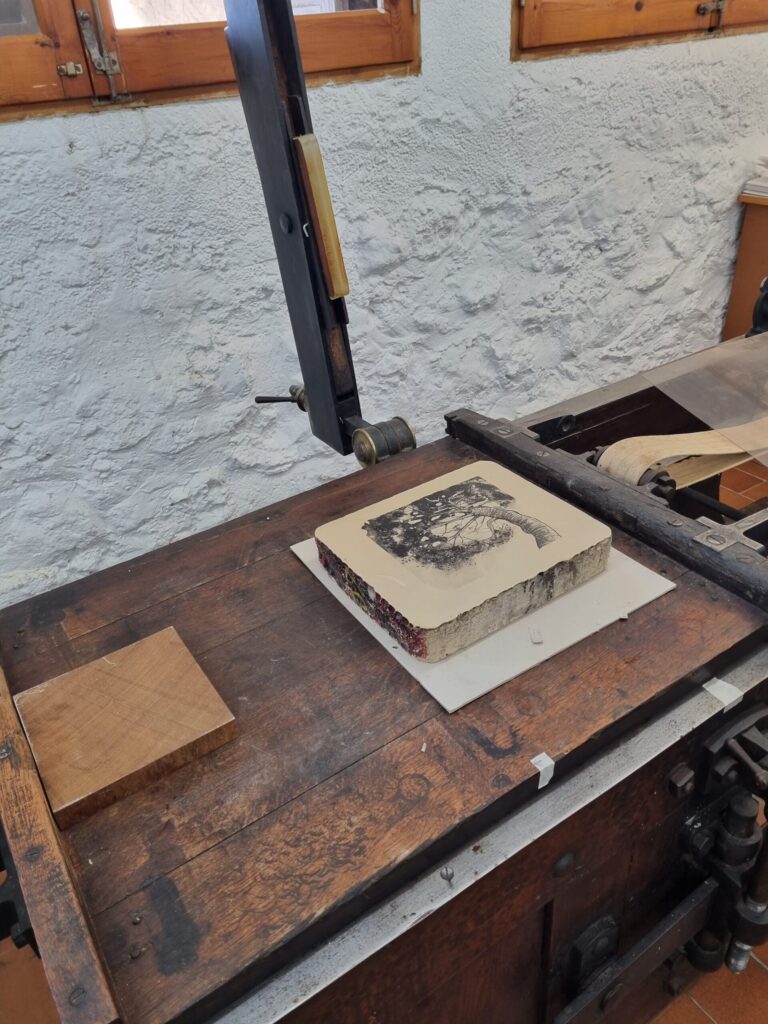
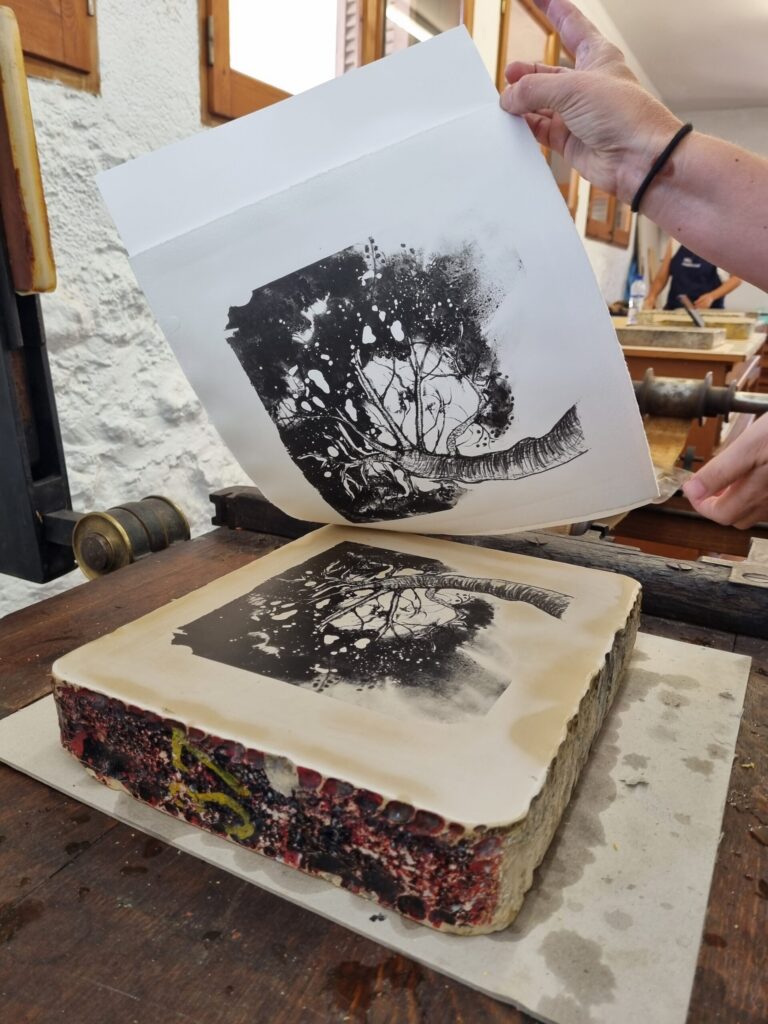
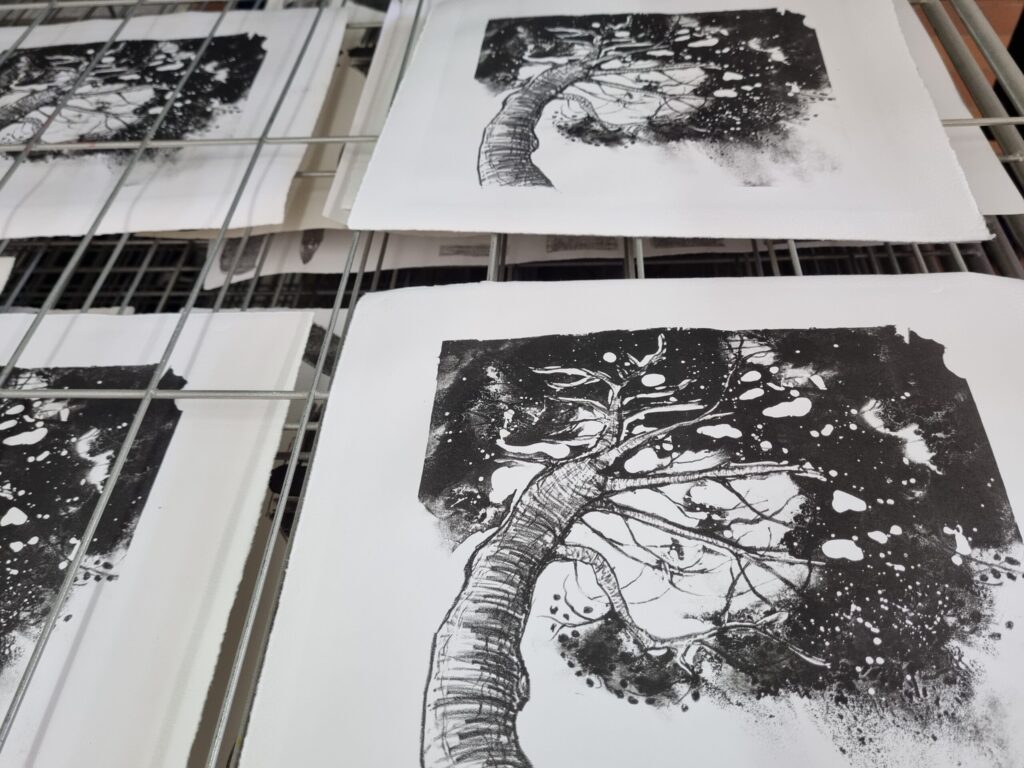
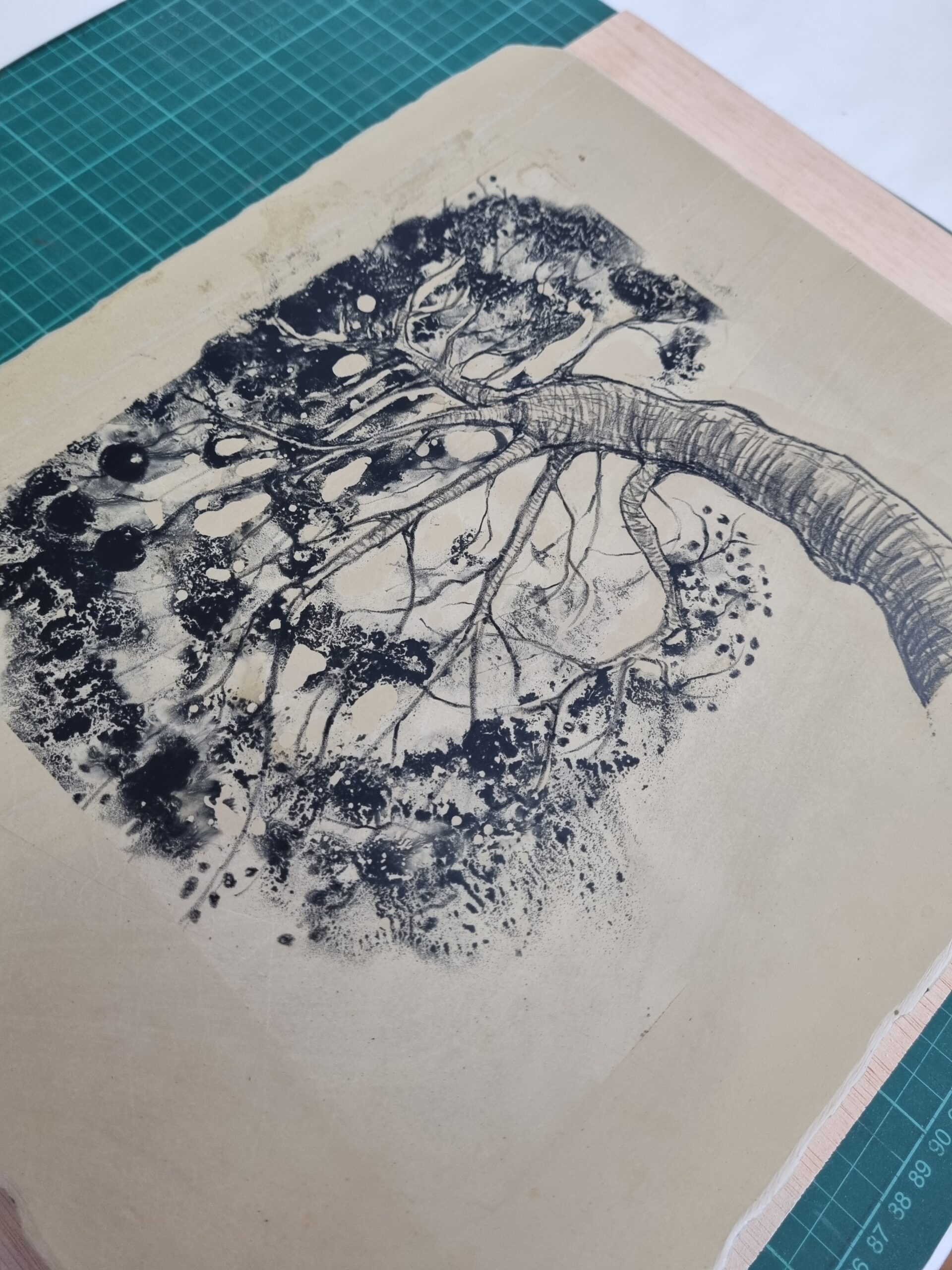
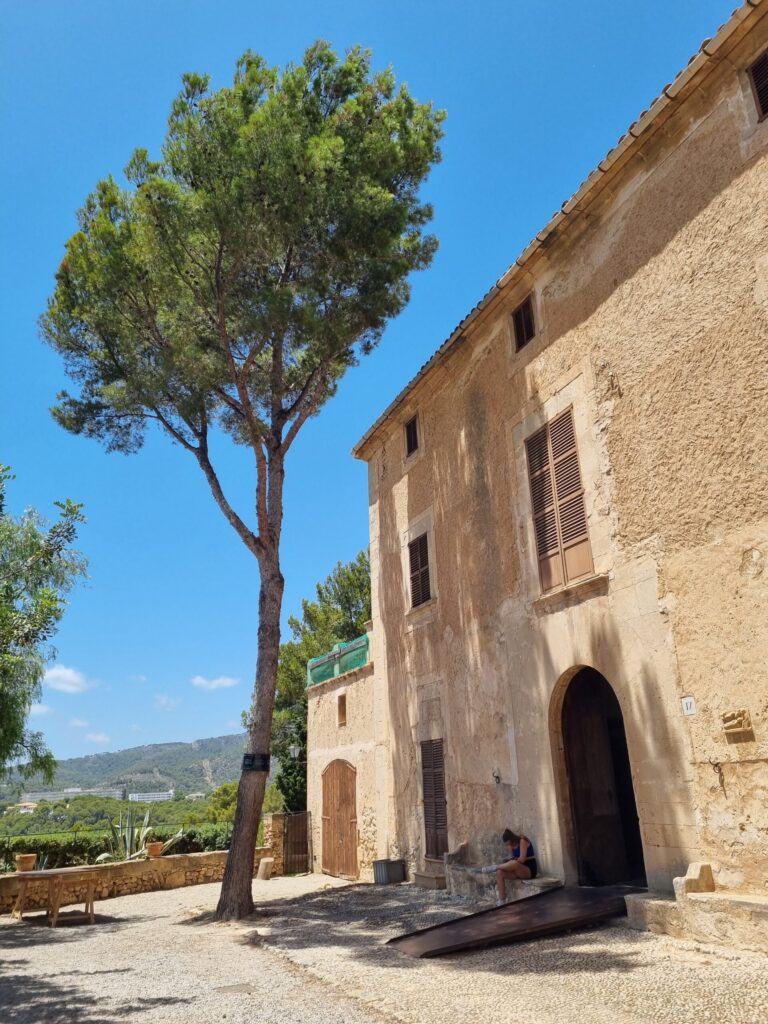
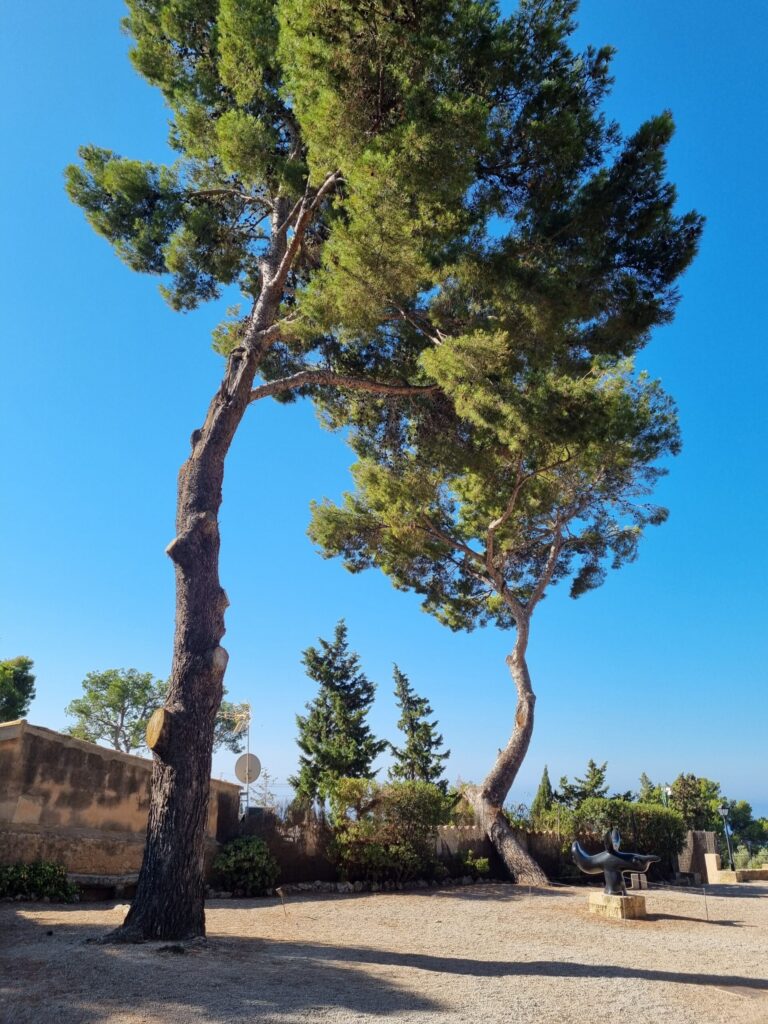
    For my first attempt at stone lithography, I decided to draw inspiration from the immediate surroundings of the printmaking workshop (just like I did for the mokuhanga workshop previously). The Son Boter possessió next door sits in the shade of some twisted, gnarly pins blancs (Aleppo pines, Pinus halepensis), with interesting lines and textures.

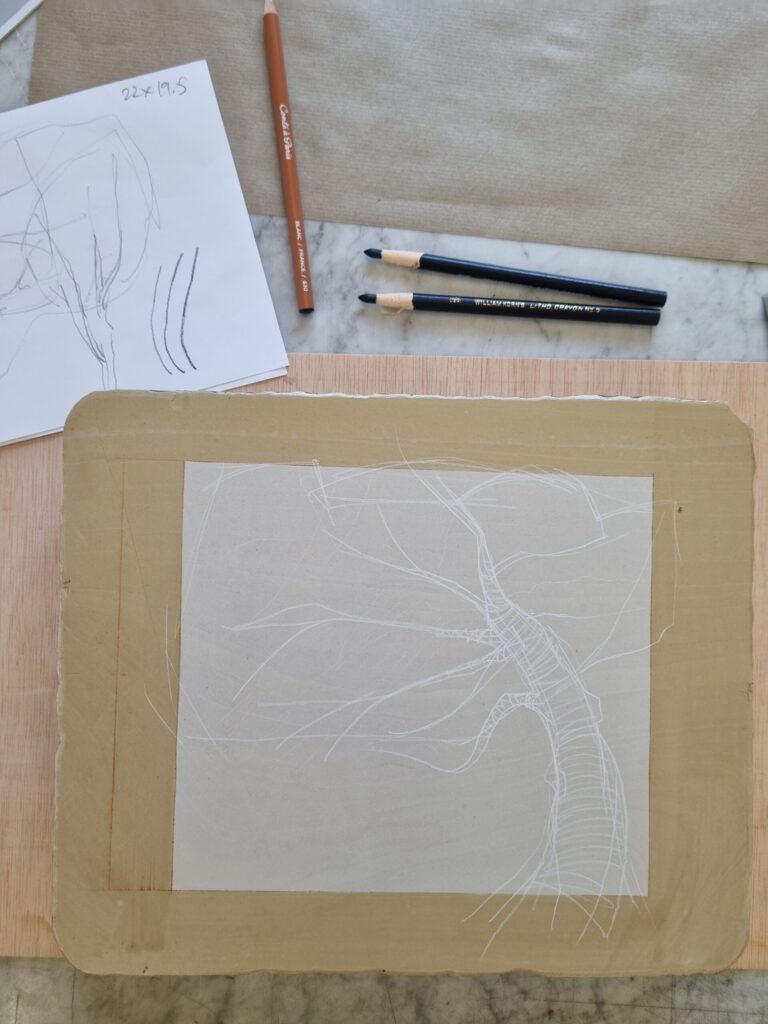
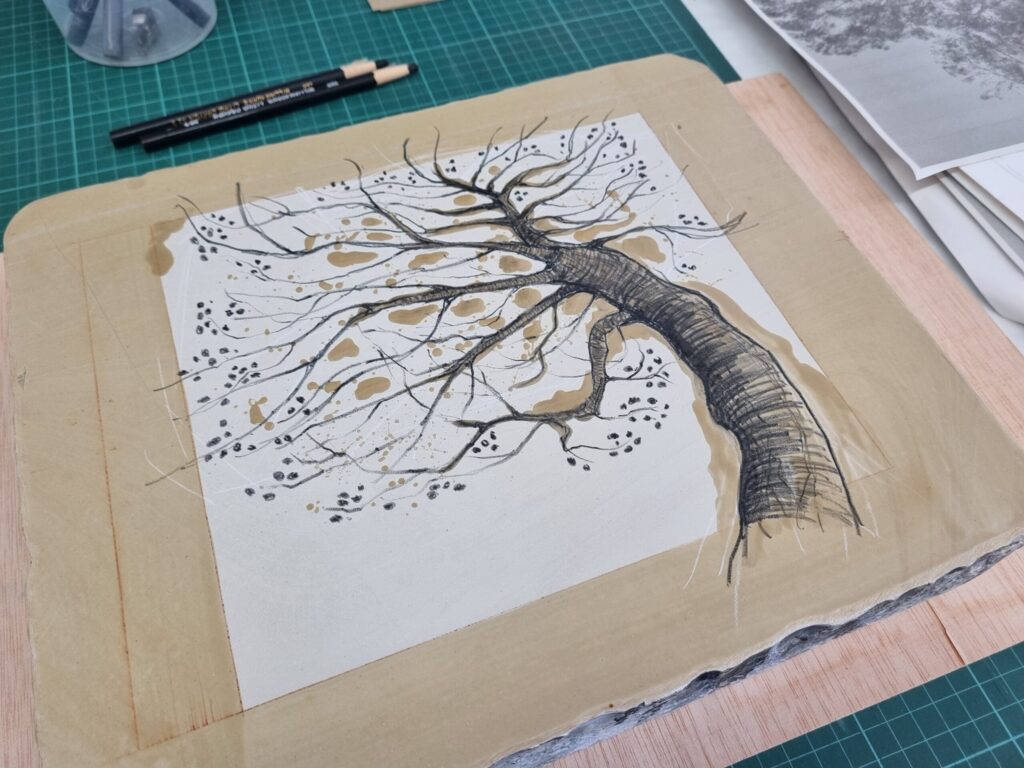
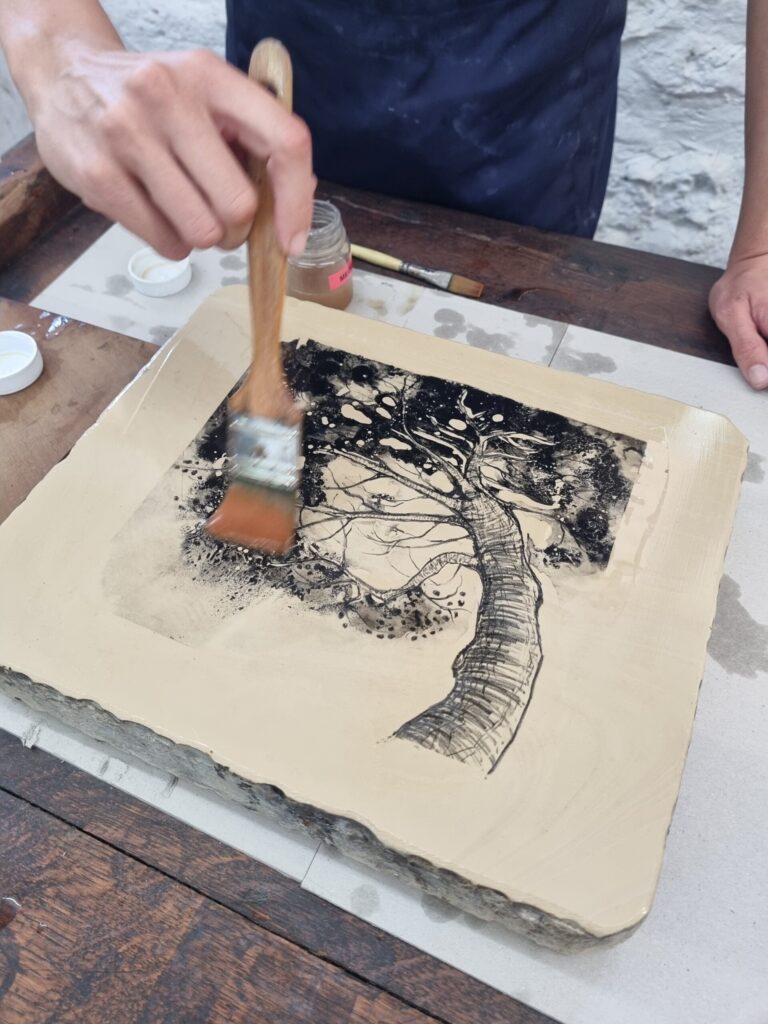
    Following a rough sketch, I drew the tree directly onto the stone with the aim of creating a bit of movement and energy. Once I had an outline I was happy with, I set to work with a black lithographic pencil to define the lines and form of the trunk and branches.

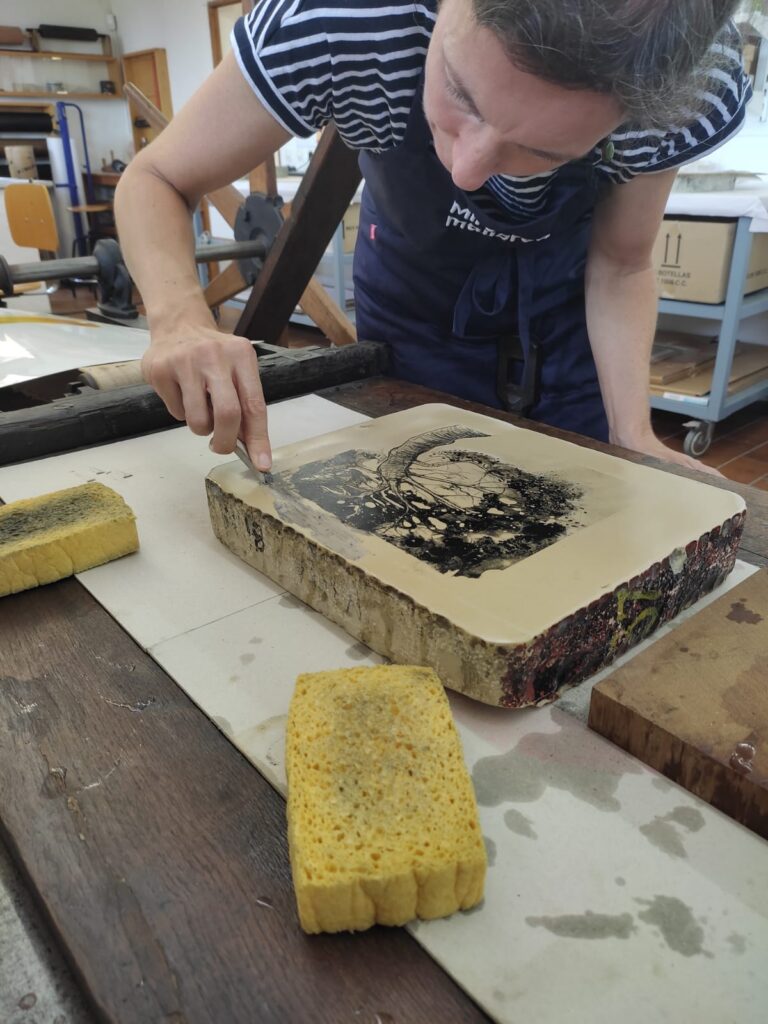
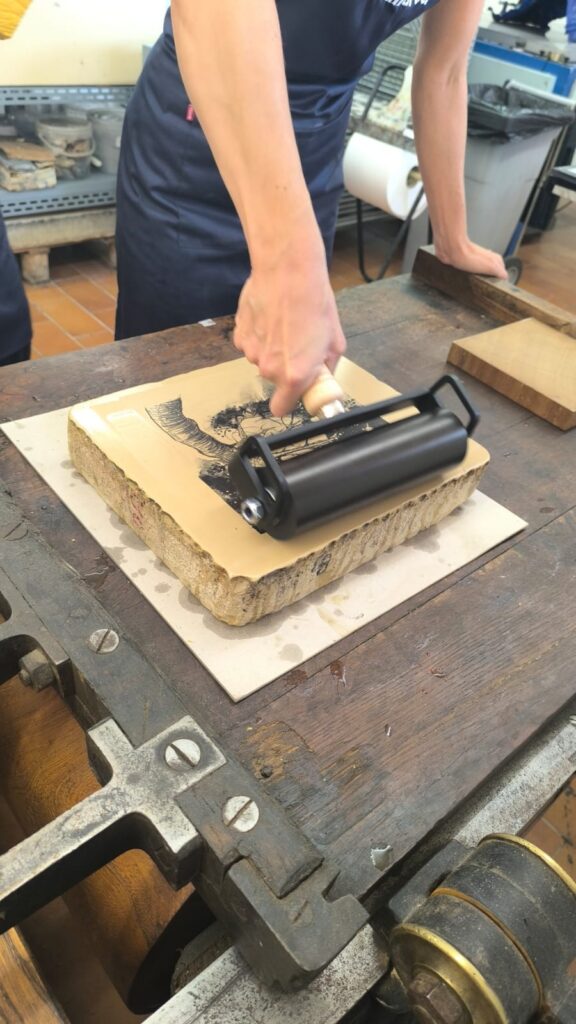
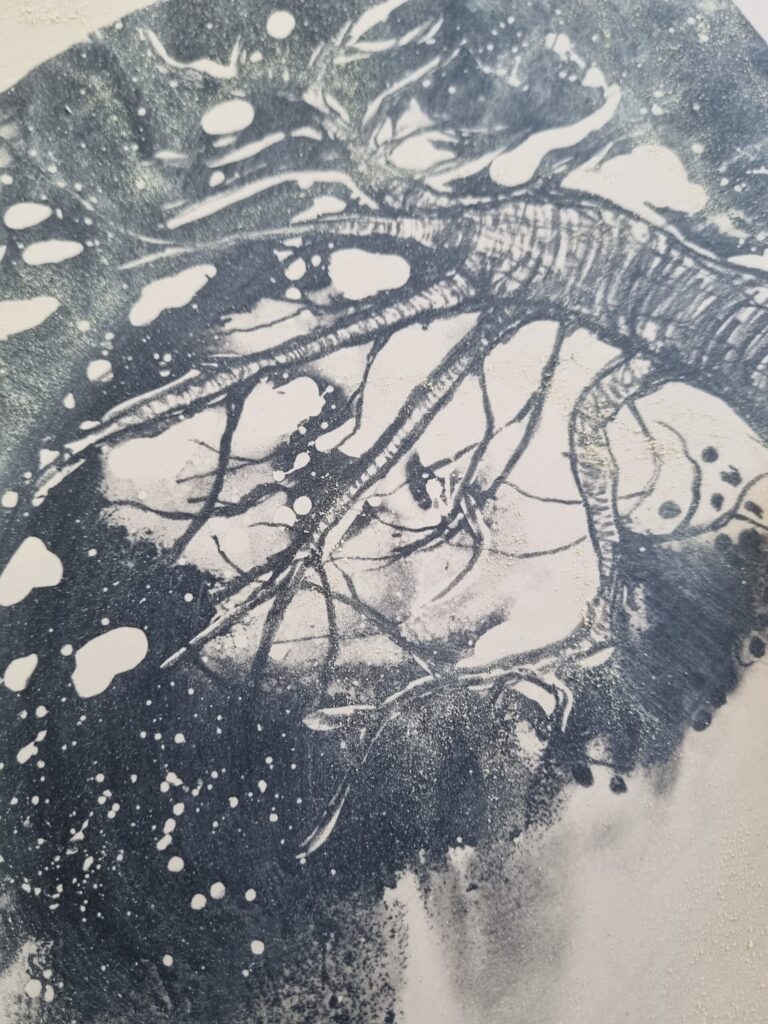
    I then painted on gum arabic to stop out areas of white and protect other parts of the drawing, before applying lithographic tusche and alcohol to achieve a different texture for the pine needles. The interaction between the tusche and the alcohol was mesmerising, and it’s this ‘giving over control’ to the materials for unexpected results that I love about printmaking.

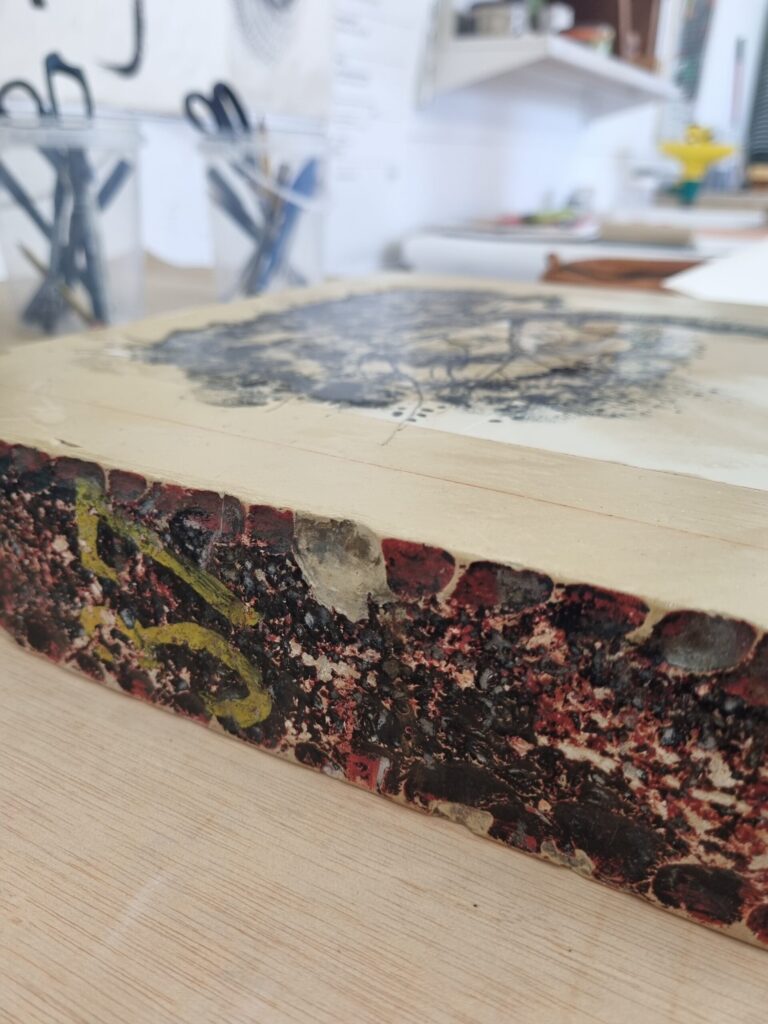
    The developed image had some lovely effects that couldn’t be seen at the drawing phase, and which only appeared once the stone had been prepared for printing. This was down to how the grease moved around the plate (due to the alcohol) and penetrates the stone, even if it’s not visible to the eye. This was a very happy accident, as it added to the sense of movement I was hoping to achieve.
  • Collagraph of a Mallorcan ‘ferreret’

    Collagraph of a Mallorcan ‘ferreret’

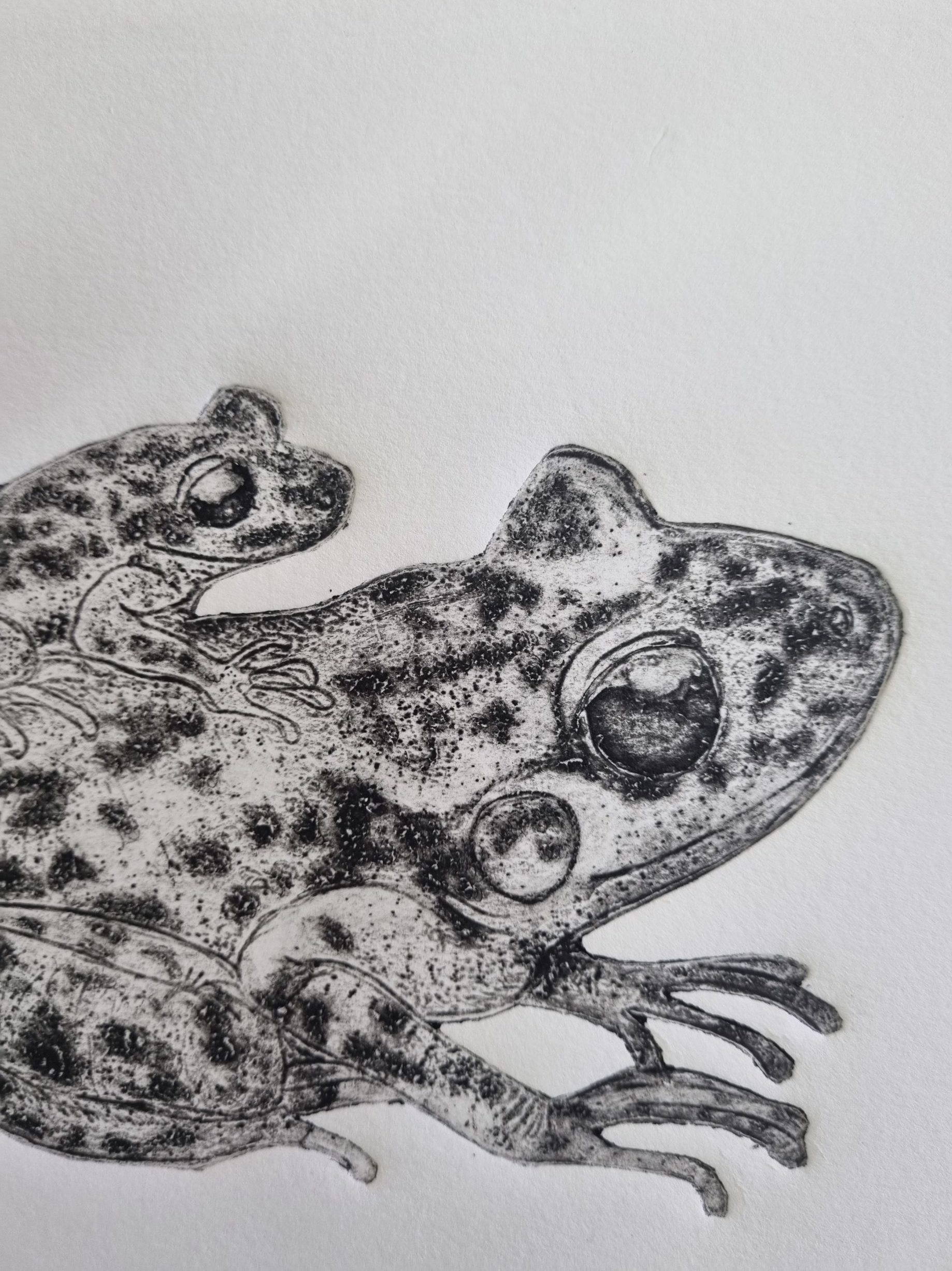
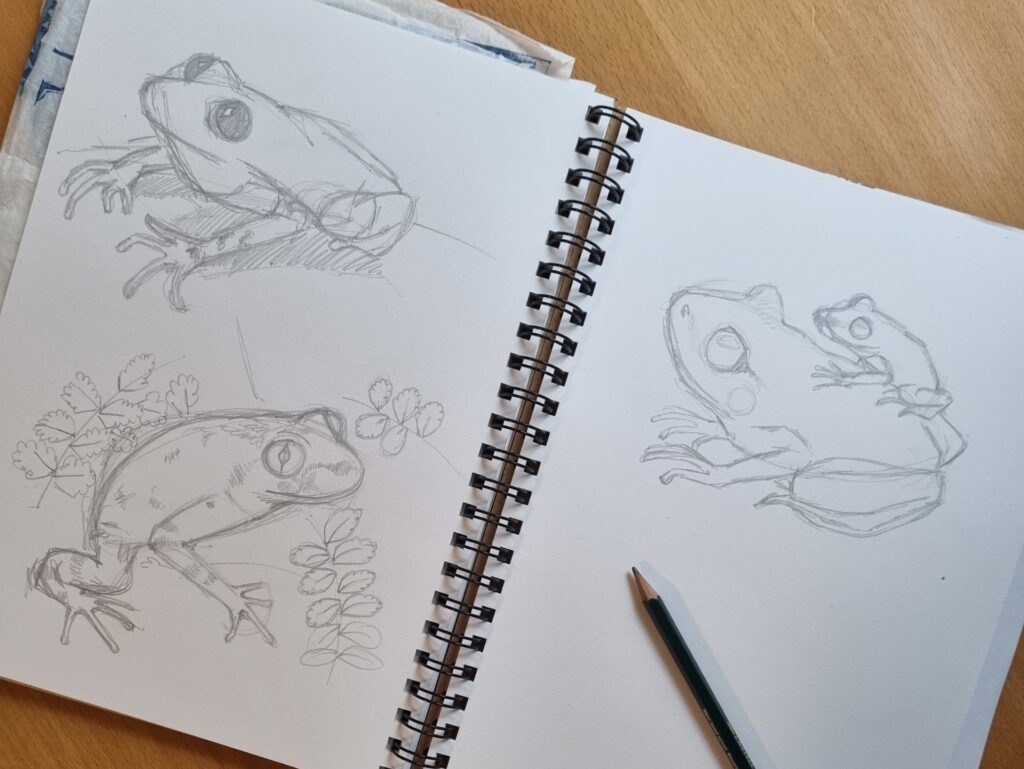
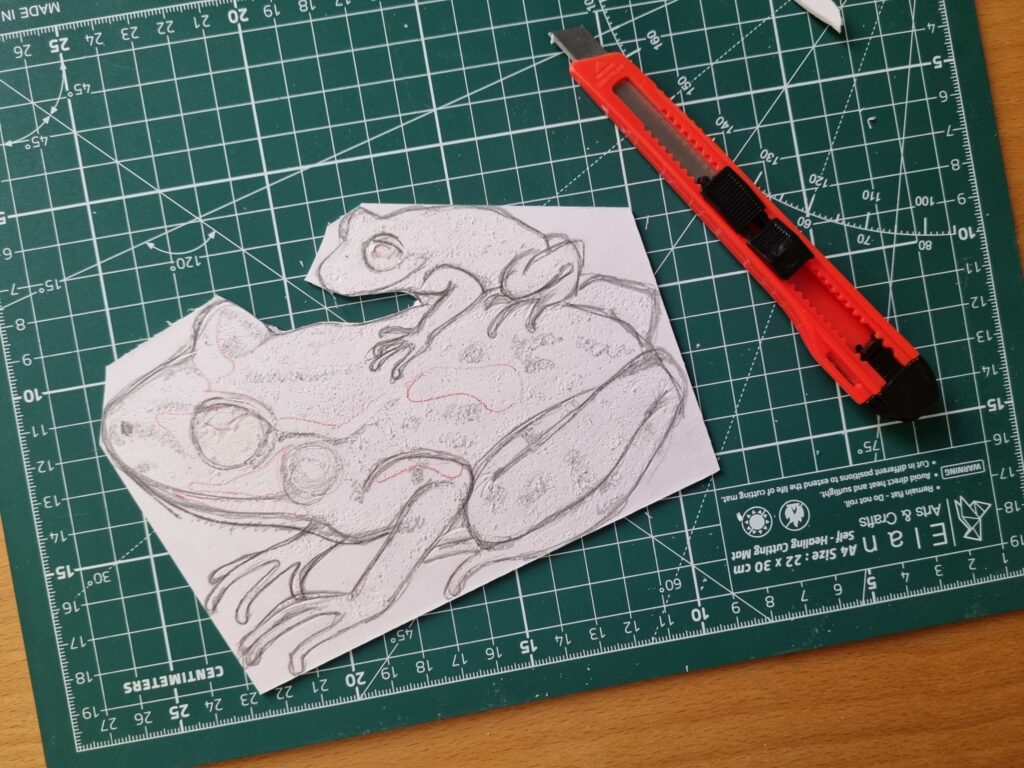
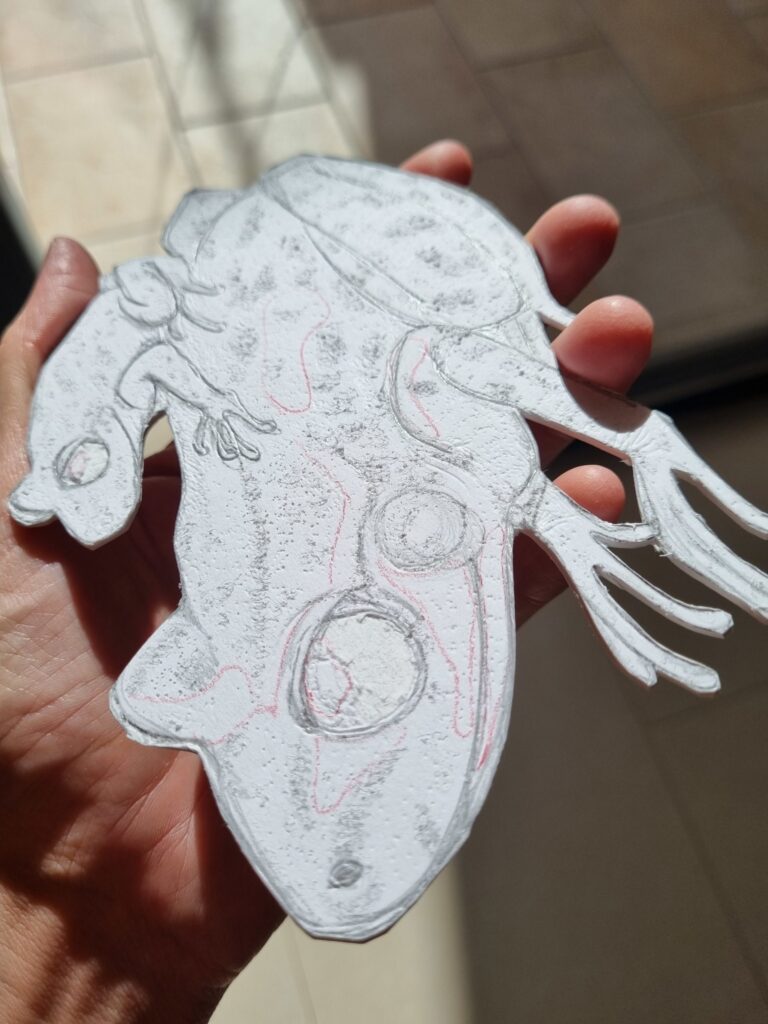
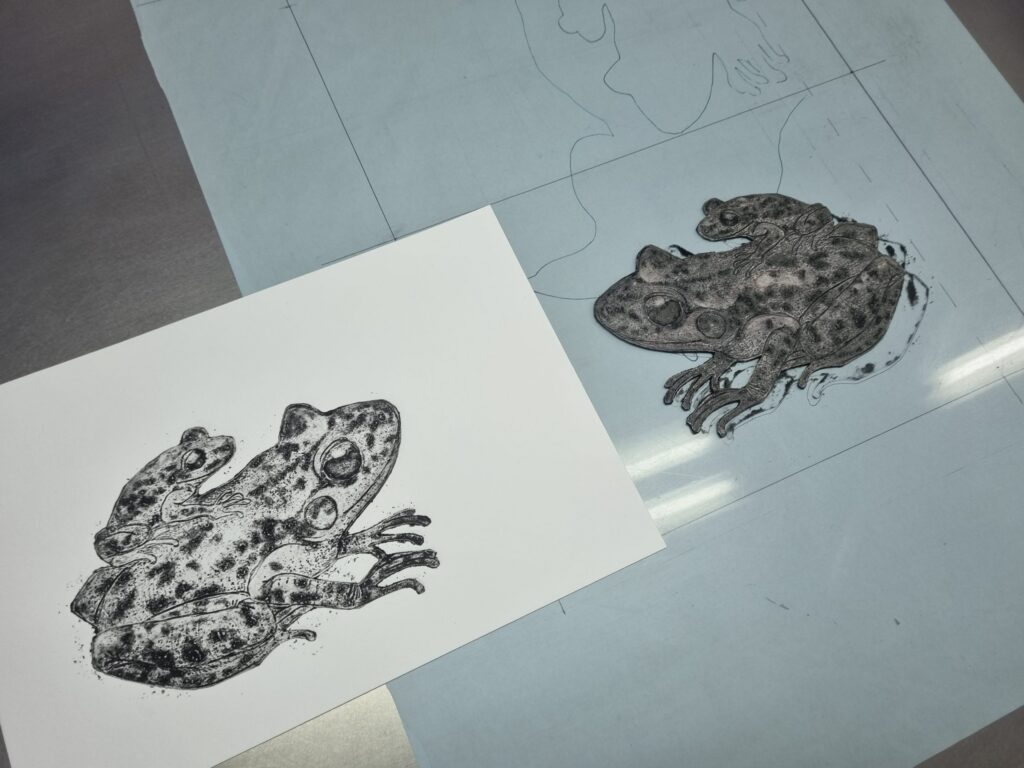
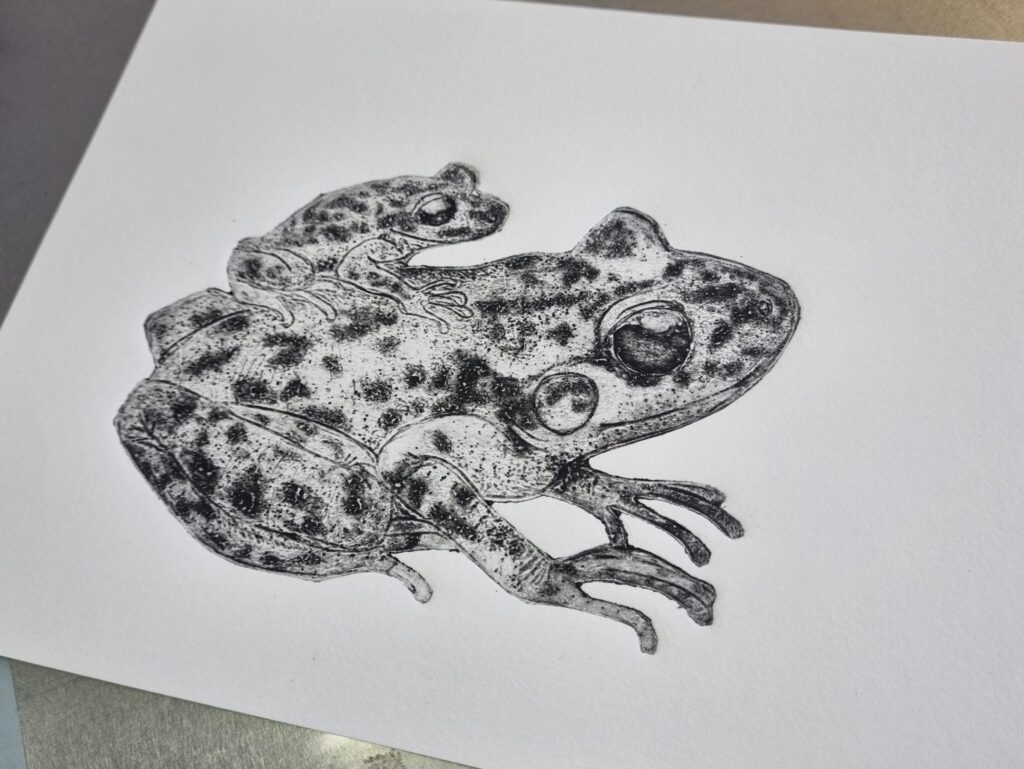
    Following my first attempt at creating a collagraph plate, I decided the next print would be of an endangered ‘ferreret’ (well, two), which is a tiny (max. 4cm long) frog endemic to Mallorca.

    It exists only in the Serra de Tramuntana mountains and represents the struggle of local fauna to survive in the face of invasive species and other significant threats to their habitat.

    One of the challenges of this block was creating the markings found on the frogs’ skin. As I had no idea whether my approach would work, it was (again) pretty exciting to pull the print and see what the result was.

    On the first print, there were a few mall shellac shards around the image, so I either painted the coats too thick or the pressure was slightly too high. But I was otherwise really happy with how it turned out.

  • First attempt at a collagraph

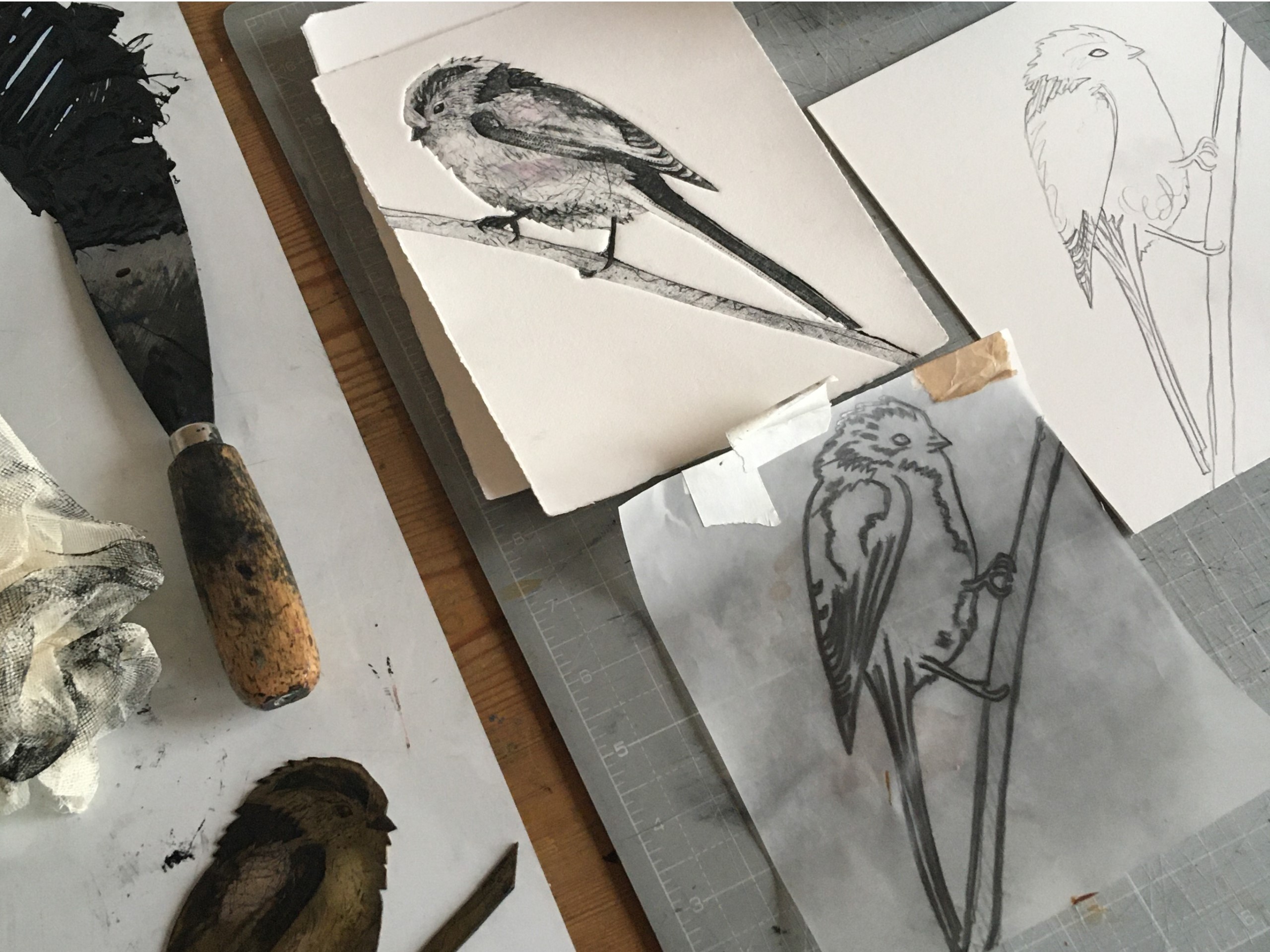
    After my collagraph tutorial with Marian Haf, I couldn’t wait to have a go at putting into practice all the steps she’d explained. Naturally, my chosen subject was a chicken (new arrivals in the garden at home).

    The photos below show each stage of creating the collagraph plate, including the initial drawing, scratching details into the mountboard, sealing the plate with shellac, inking up and a resulting early print.

    As well as printing a lovely one-colour version in Prussian Blue (a favourite colour), I also had a go (under Julio’s guidance) at creating a two-colour version using the à la poupée technique. This uses a ball of fabric to add different colours to a single intaglio plate.

    It was intriguing and exciting to peel back and reveal the first print after putting it through the press, as I had no idea what to expect. But I was really pleased with the result and loved the idea of using simple (and relatively ‘safe’) materials to create the plate.

  • Julio León’s ‘Torculari’ print studio

    Spanish printmaker and artist Julio León runs a small printmaking taller in Algaida, where attending printmakers form part of the Torculari Etching Collective. The studio provides access to printing facilities and an etching press, as well as Julio’s generous knowledge.

    I went along every Tuesday for half a year to, initially, print my first collagraphs created following my tutorial with Marian Haf. Julio then shared his experience to guide me in making my first copper-plate etchings with aquatint.

    It was a hugely valuable experience, with the opportunity to learn from both Julio as well as other part-time and practising printmakers. The chance to see other artists’ ideas take shape and their creative process was inspiring and motivating.

    As well as etching and aquatint, there were printmakers using techniques such as drypoint, sugar lift, photopolymer, monotype and woodcut. Take a look at some of the Torculari Etching Collective’s work on Instagram.

    In coming posts, I’ll share the works I made during my time there.

  • ‘Mokuhanga’ with Sebi Subirós

    Mokuhanga, or Japanese woodblock, is a traditional form of non-toxic relief printing that uses water-based inks. Catalan artist Sebi Subirós provided an introduction to this special, very skilful technique on a week-long course at Joan Miró’s printmaking workshops in Palma.

    Although I’ve done linoprinting, I hadn’t yet tried my hand at any type of woodcut. We learnt about creating plywood plates using relatively simple traditional Japanese tools and materials, including how to do the image transfer of our original drawing.

    Then, we went on to handprint them using natural pigments (preparing inks manually) and nori paste on Japanese papers; we were able to try out various samples so that we could see the different effects that could be achieved with each.

    Many of the people on the course were working artists and came prepared with their own ideas. While we were all starting from the same point, it was a brilliant opportunity to learn from experienced individuals and how they created their own visions.

    I decided to take inspiration from the immediate grounds around the workshops and chose the 18th-century Mallorcan possessió Son Boter. After creating an ink sketch, I then split the image into three colours and transferred these to separate plates to create a multi-block print (also a first for me!).

    The whole experience was fascinating and a fairly steep learning curve, from transferring the images using nori paste and cutting into the plates using knives and chisels, to creating registration indents called kentos and manually inking up and printing the plates using a baren.

  • Collagraph with Marian Haf

    Collagraph with Marian Haf

    Living on a small island in the middle of the Mediterranean often makes it tricky to find courses you can actually get to in person. I’ve loved Welsh printmaker Marian’s work and style since I stumbled across her on Instagram, and was excited to see that she offered online tutorials in both relief and intaglio collagraph techniques.

    I had been curious about intaglio printmaking for a while and collagraph seemed to be a good ‘gateway’ technique (as well as being an option for trying out as a relief method as I don’t yet have an etching press). Marian’s work has a painterly look that really appeals to me, too, so she was the obvious person to turn to for an introduction.

    We had a quick chat over email while booking the session, and Marian kindly agreed to adapt the tutorial to cover both collagraph approaches. She usually focuses on either one or the other and sends one of her beautiful bird prints to participants, but as I’m in Spain and the postal service being what it is post-Brexit, this wasn’t possible in my case.

    Ahead of the one-hour video call, Marian sent over an illustrated (very handy to have a visual guide) list of recommended materials. However, I didn’t need these for the tutorial, which was purely going to be an intensive, in-at-the-deep-end demonstration of how she creates collagraph plates and prints them using the two techniques.

    Unsurprisingly, the time whizzed by. Marian was absolutely lovely to speak to and kindly shared her expertise and handy tips based on many years of trial and experimentation in her print studio. Watching her skillfully create the plates was mesmerising and inspiring in equal measure, and left me itching to have a go as soon as I can find someone with an etching press…

    Find out more about Marian and her work on the Studio Cennen website, or on her Etsy page. All photos courtesy of Marian.