Tag: courses

  • ‘El pi de Son Boter’ stone litho print

    ‘El pi de Son Boter’ stone litho print

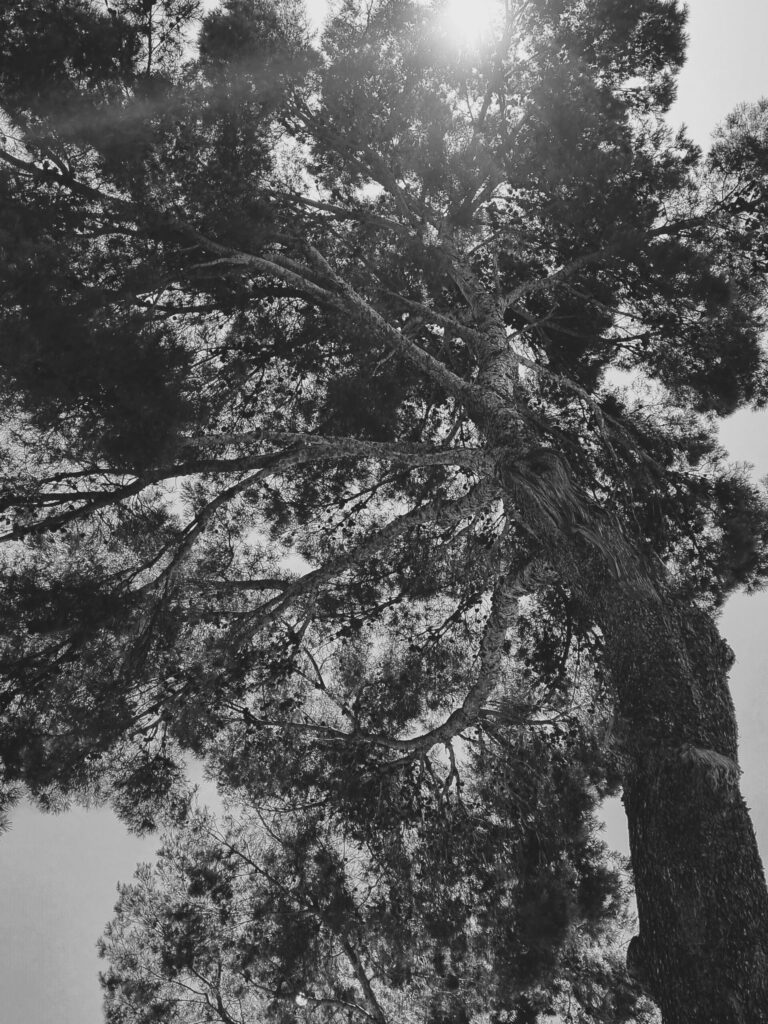
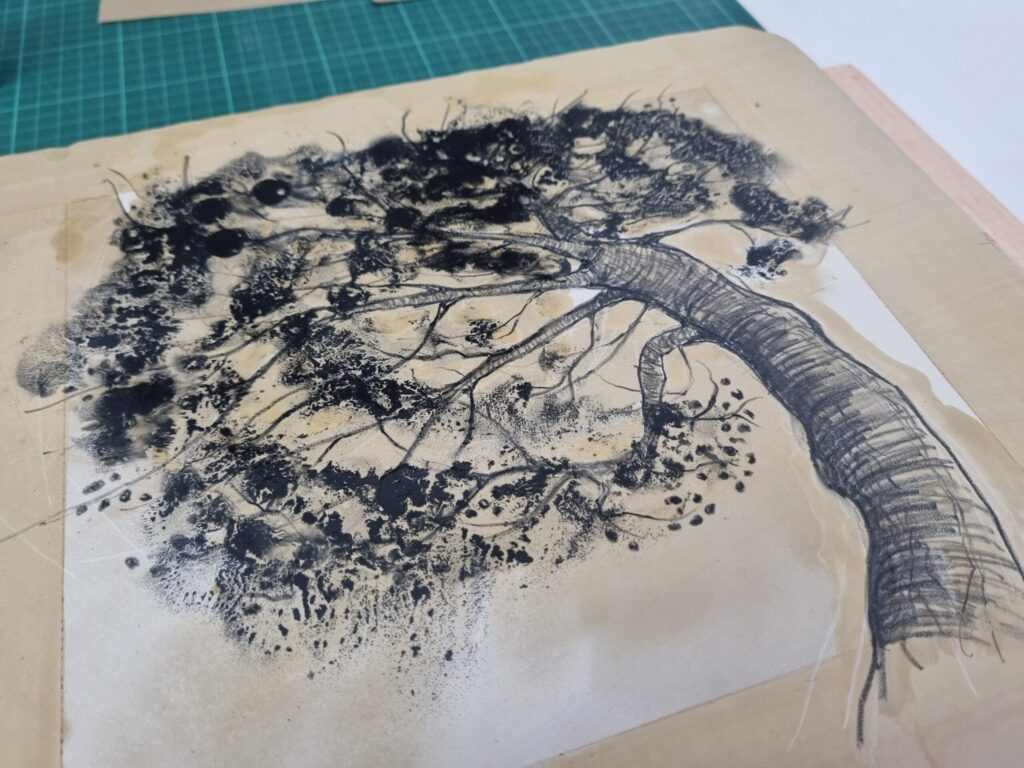
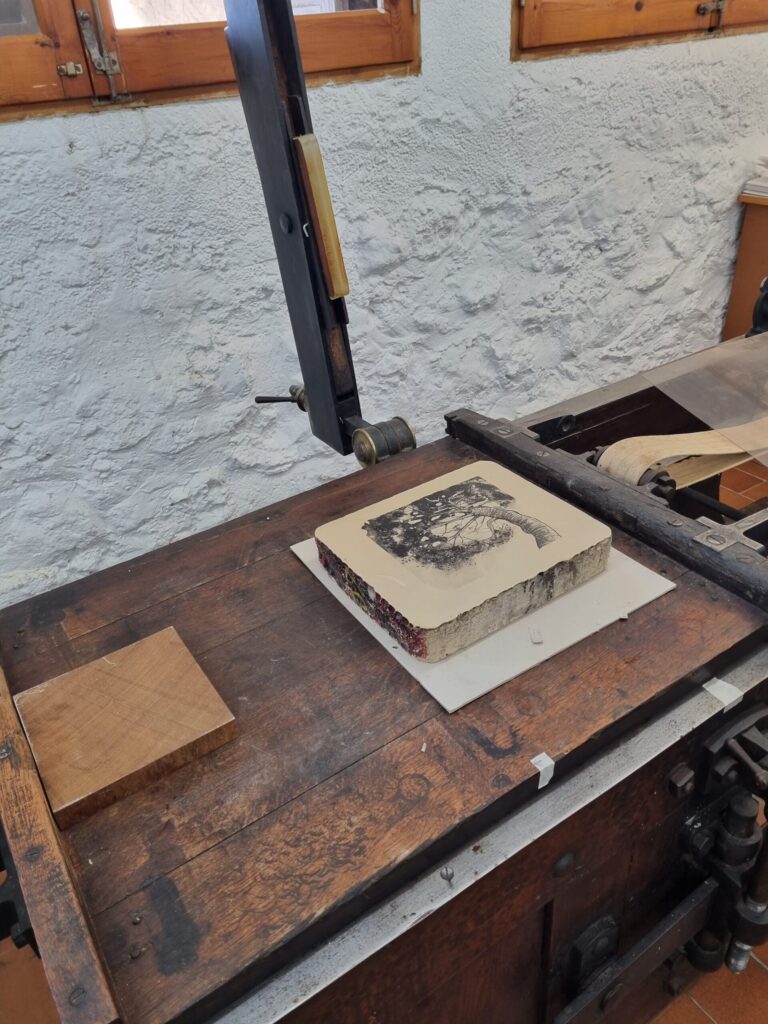
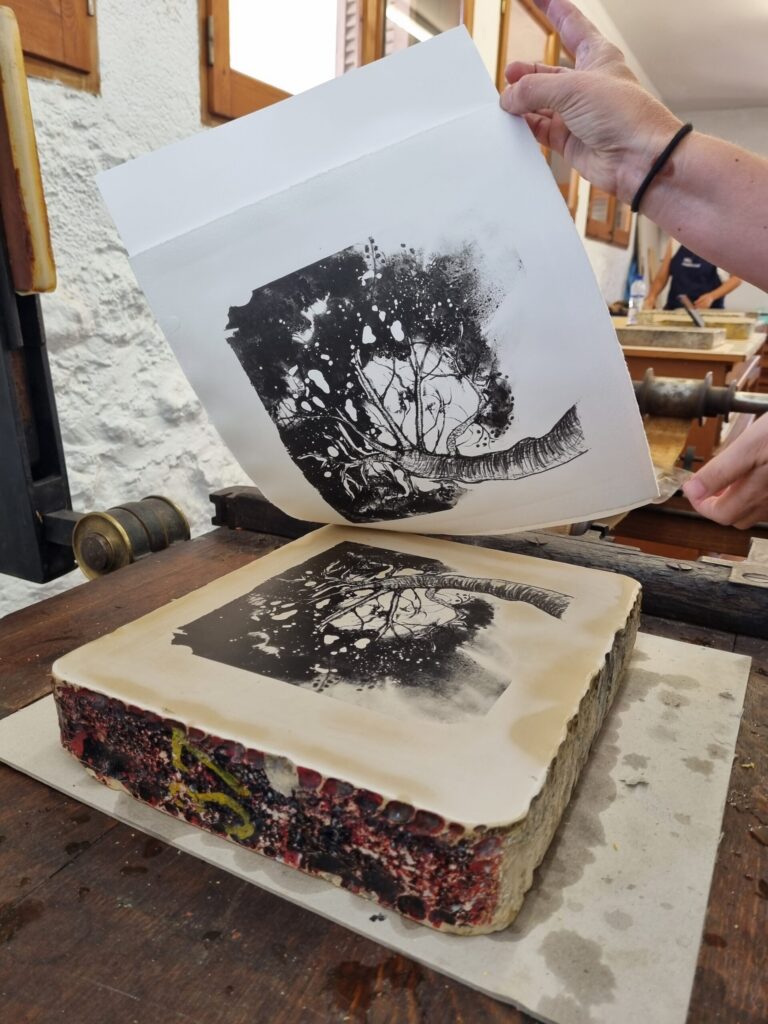
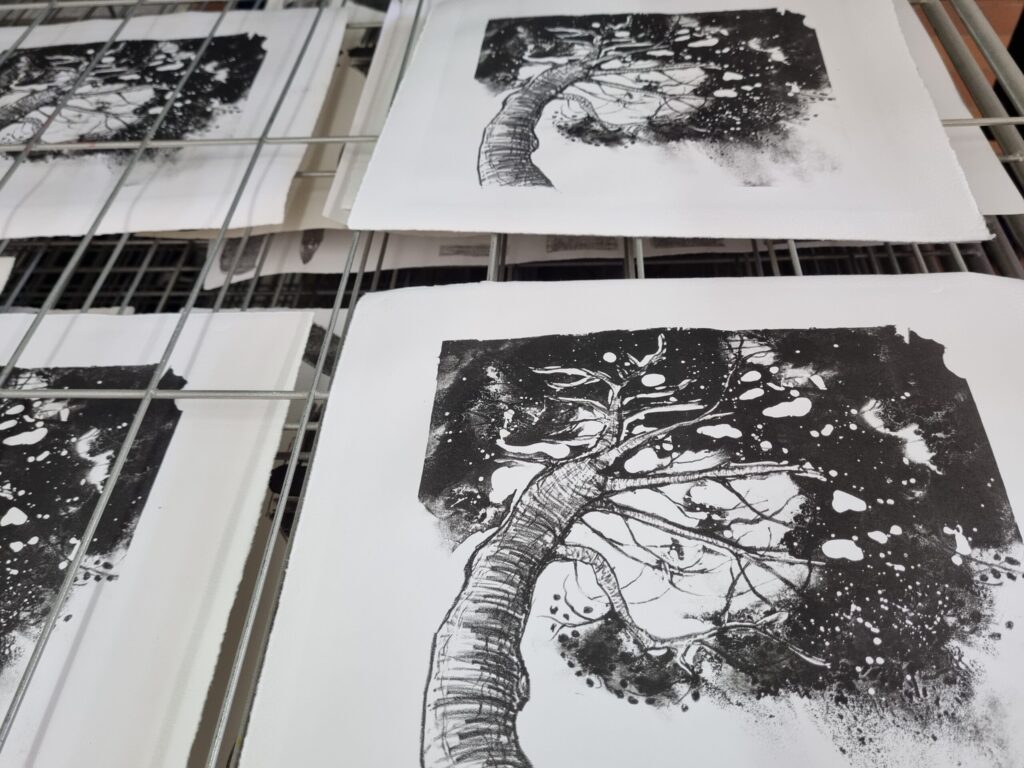
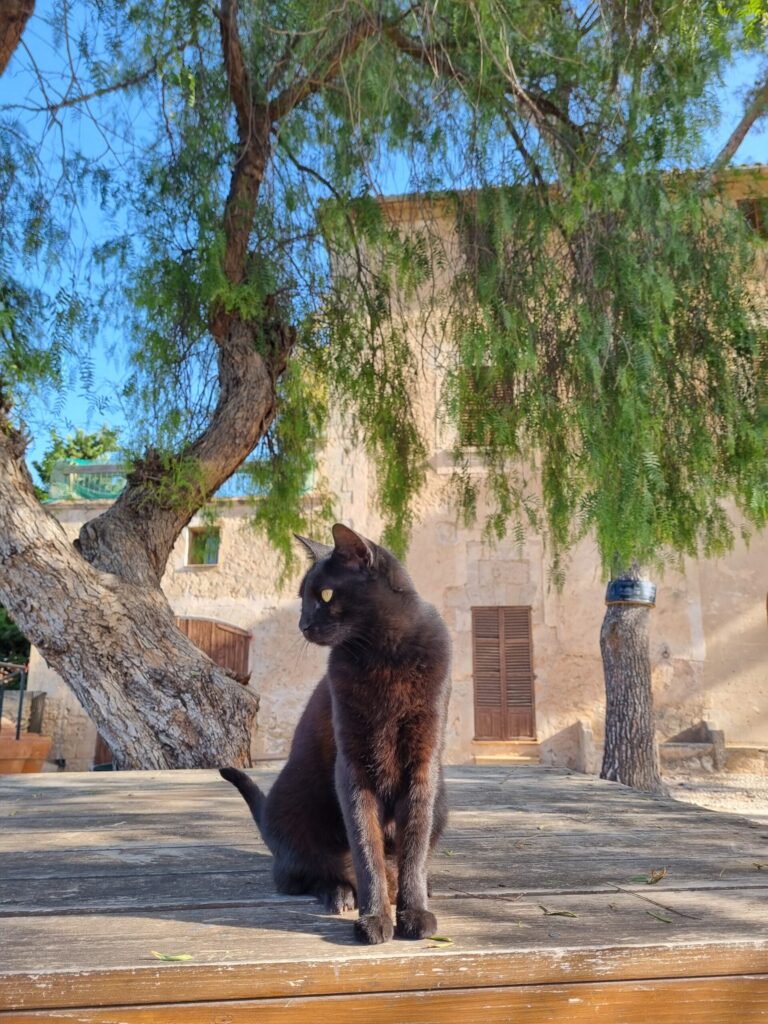
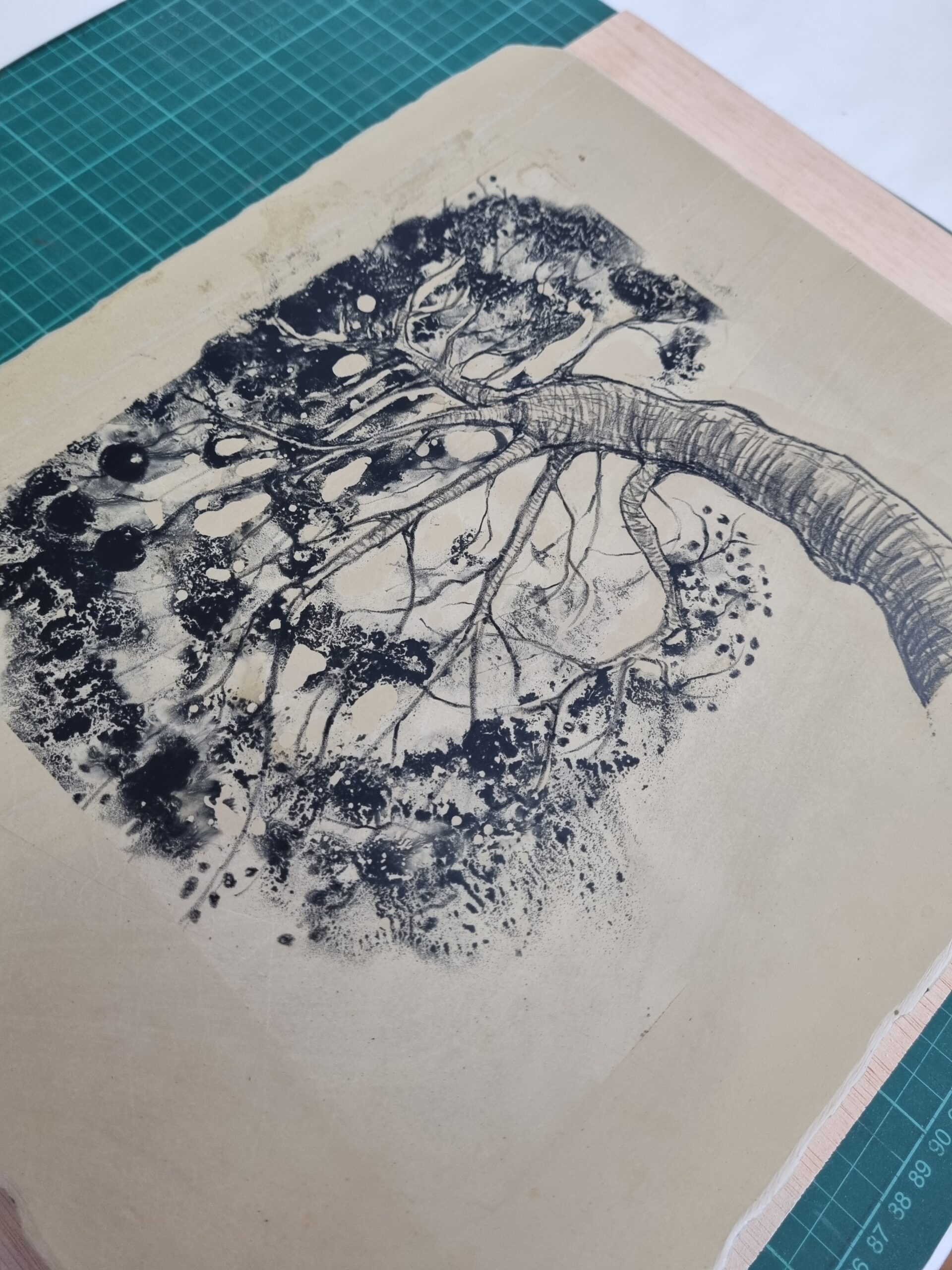
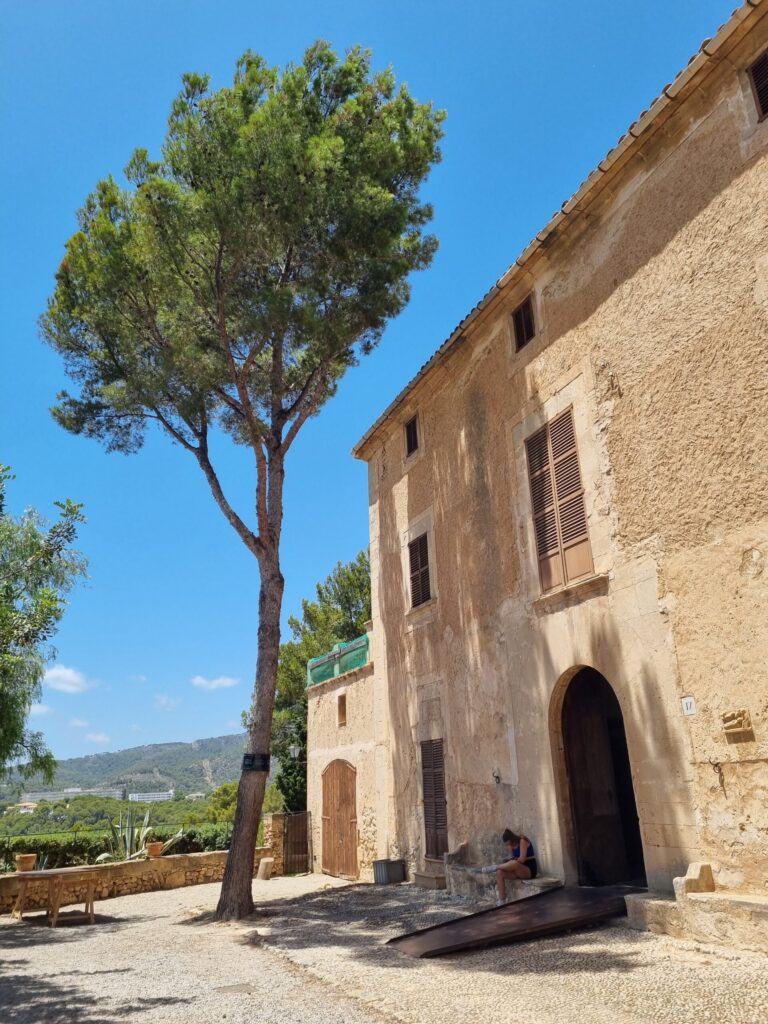
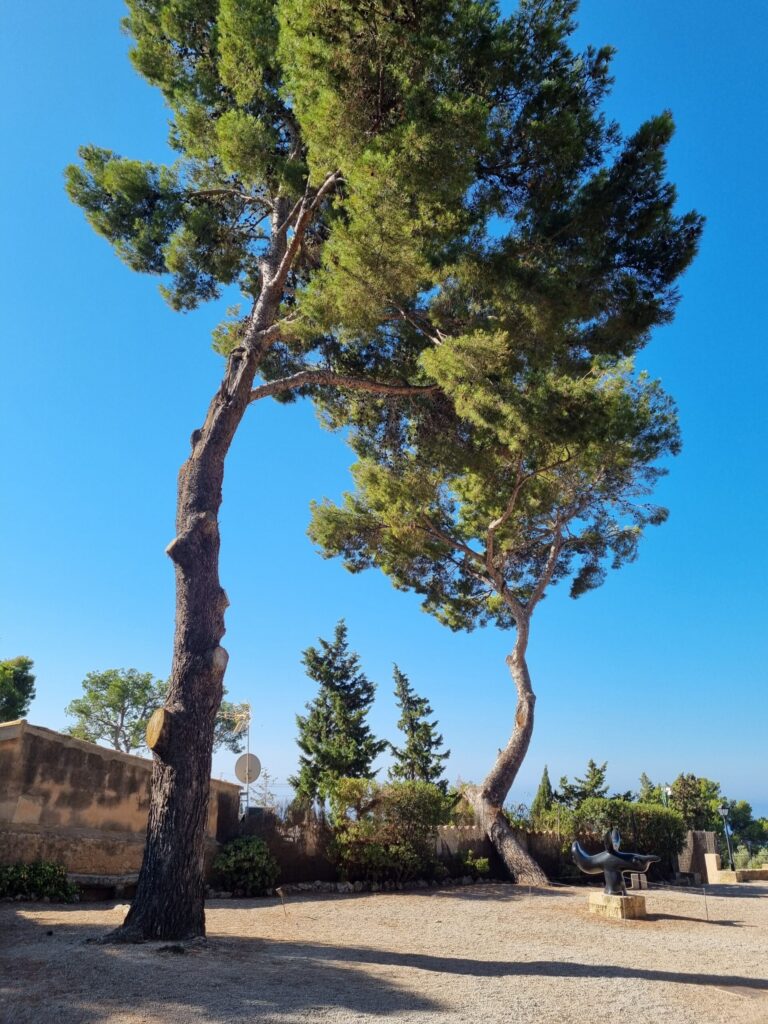
    For my first attempt at stone lithography, I decided to draw inspiration from the immediate surroundings of the printmaking workshop (just like I did for the mokuhanga workshop previously). The Son Boter possessió next door sits in the shade of some twisted, gnarly pins blancs (Aleppo pines, Pinus halepensis), with interesting lines and textures.

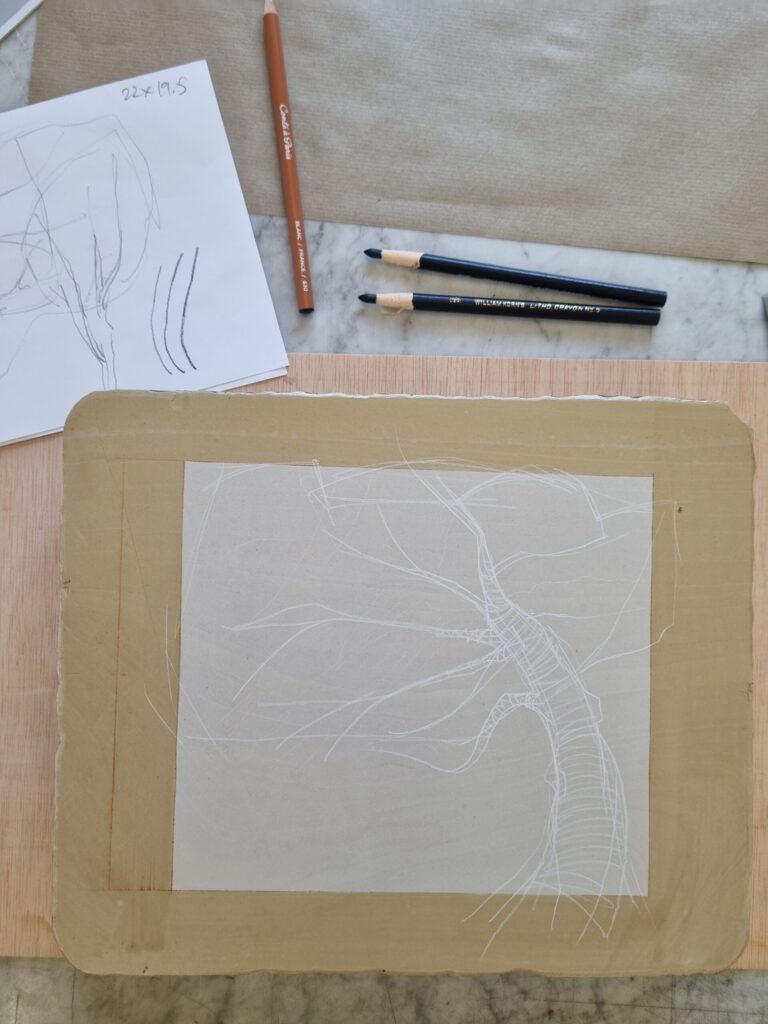
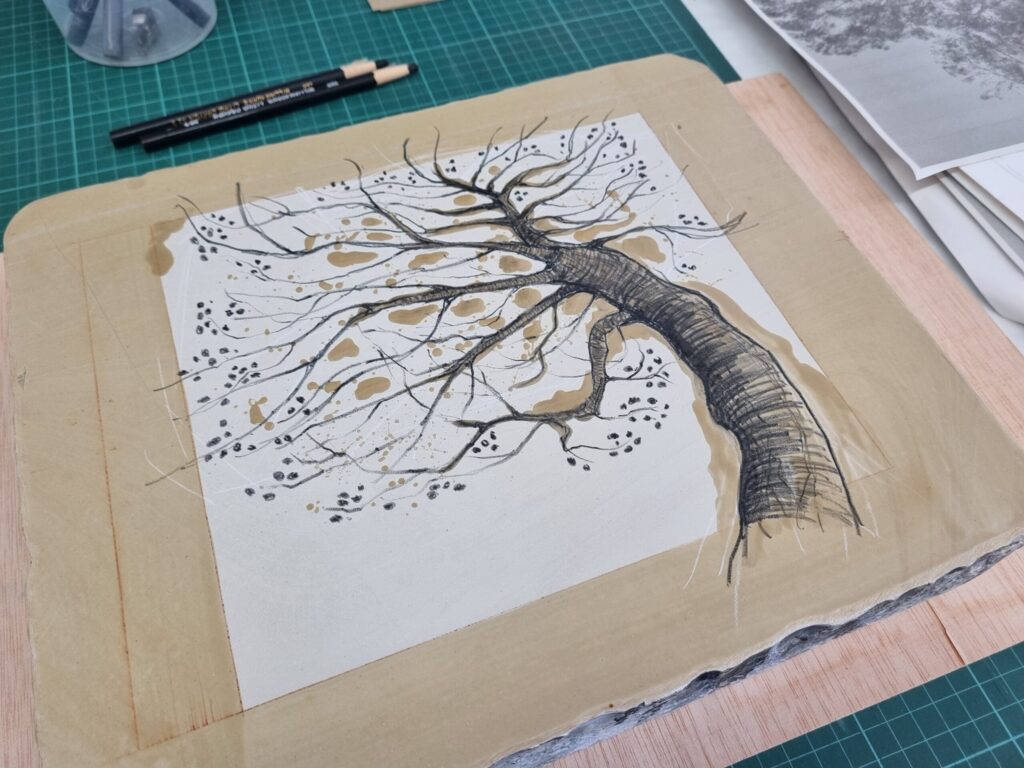
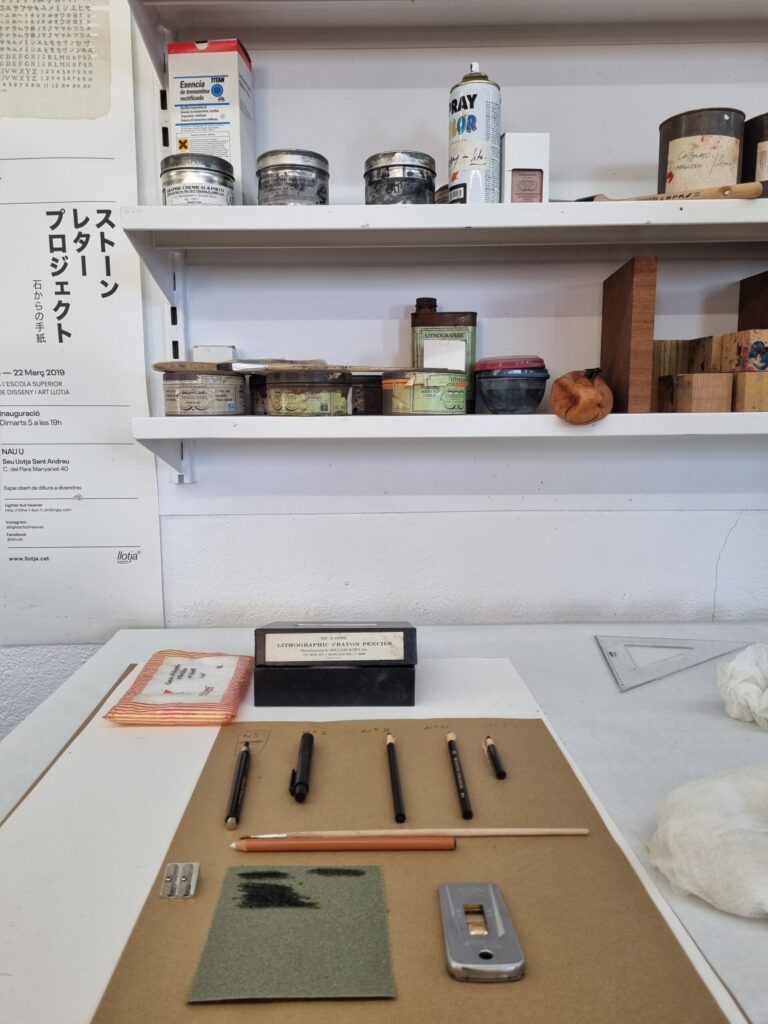
    Following a rough sketch, I drew the tree directly onto the stone with the aim of creating a bit of movement and energy. Once I had an outline I was happy with, I set to work with a black lithographic pencil to define the lines and form of the trunk and branches.

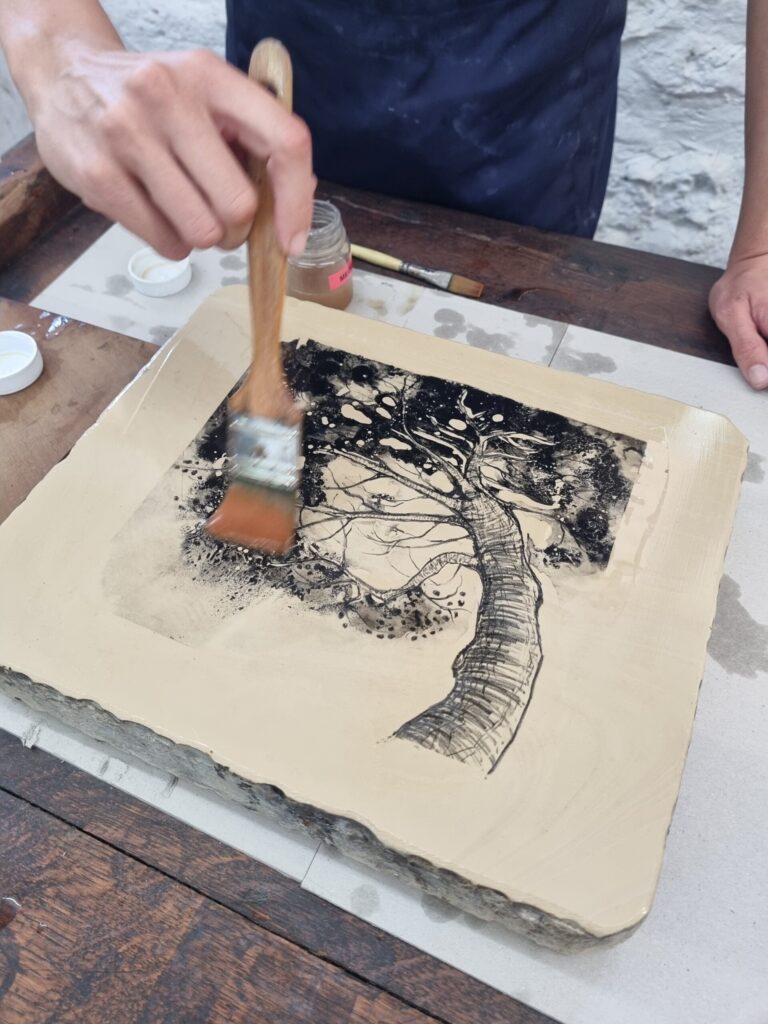
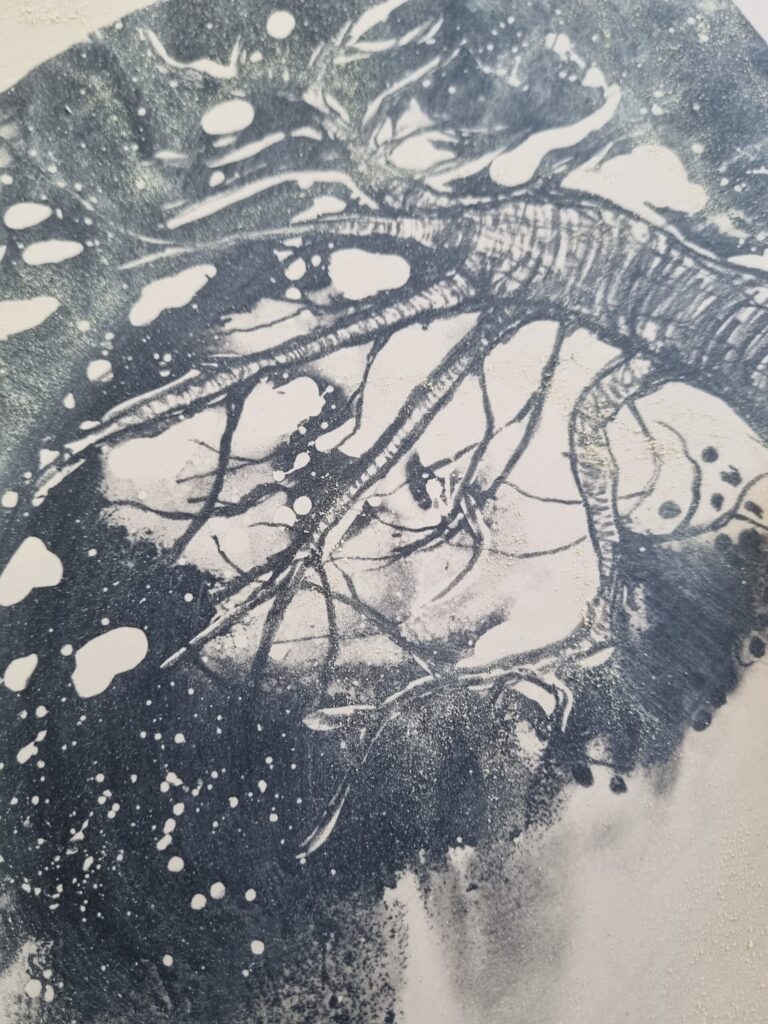
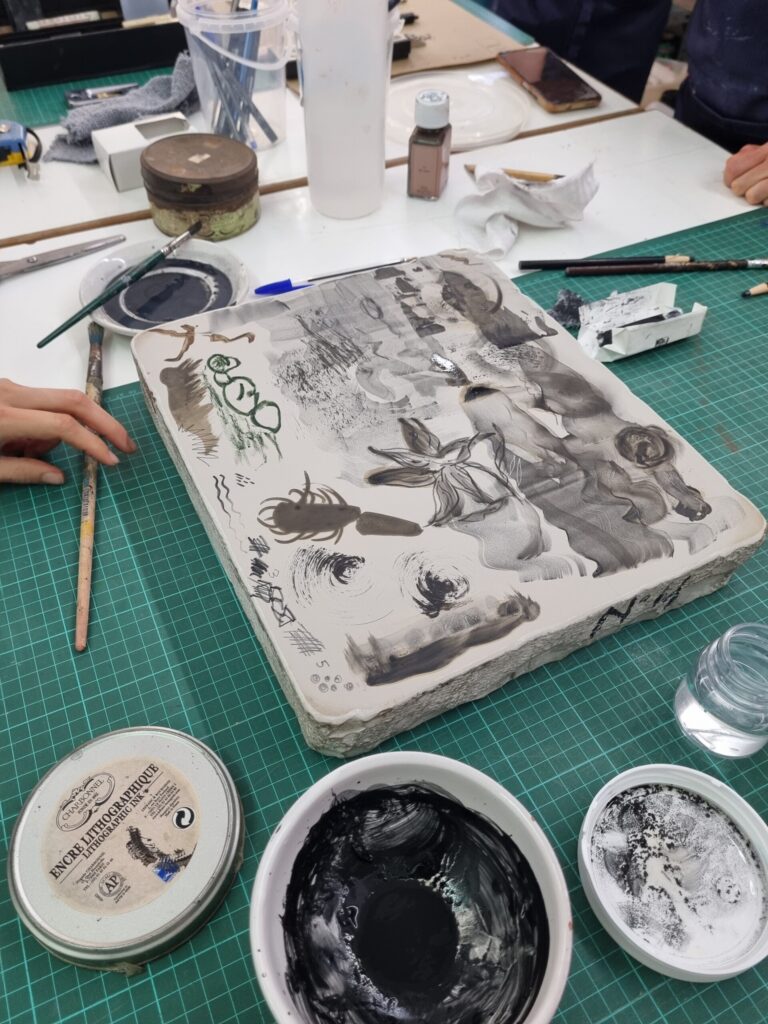
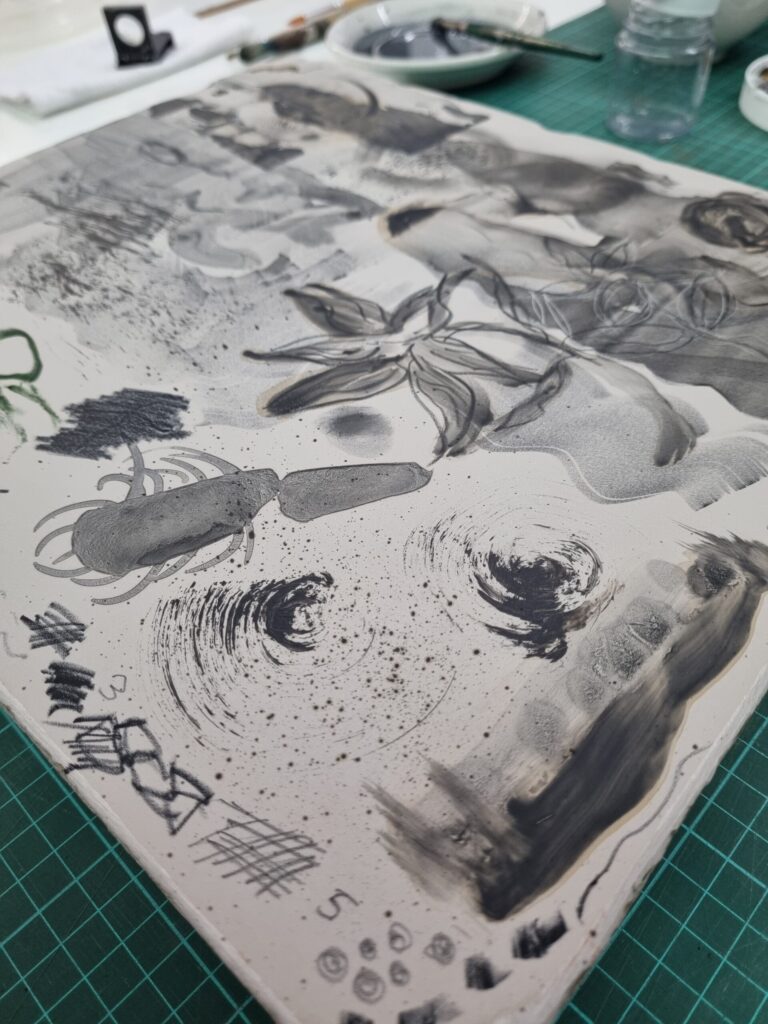
    I then painted on gum arabic to stop out areas of white and protect other parts of the drawing, before applying lithographic tusche and alcohol to achieve a different texture for the pine needles. The interaction between the tusche and the alcohol was mesmerising, and it’s this ‘giving over control’ to the materials for unexpected results that I love about printmaking.

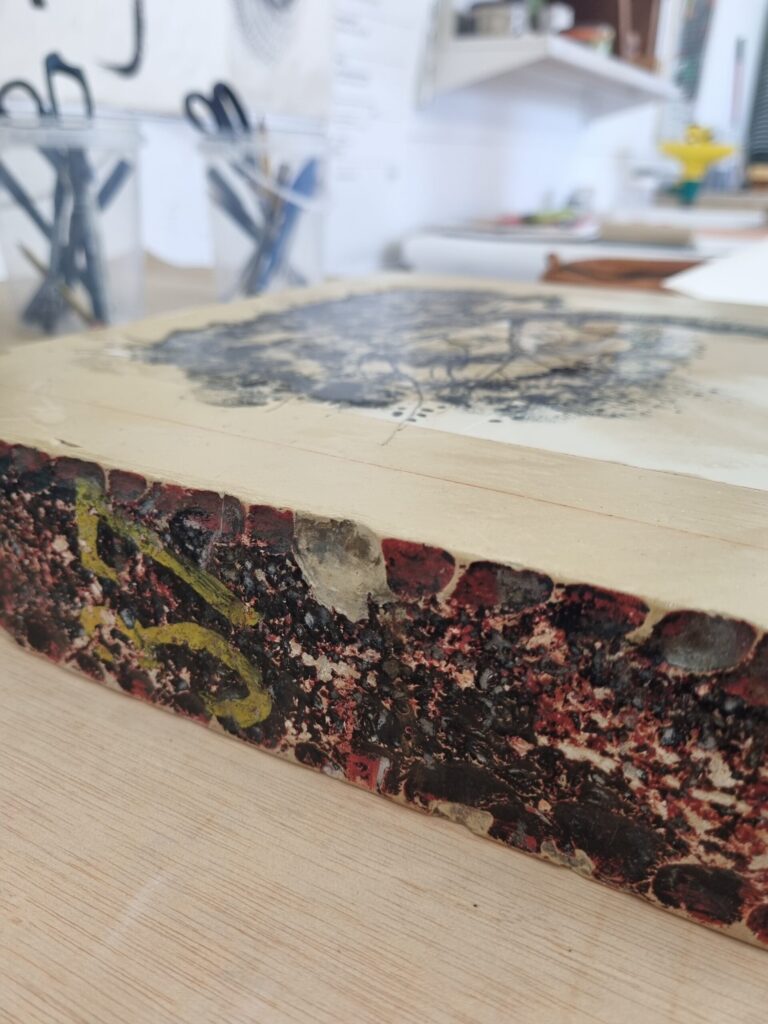
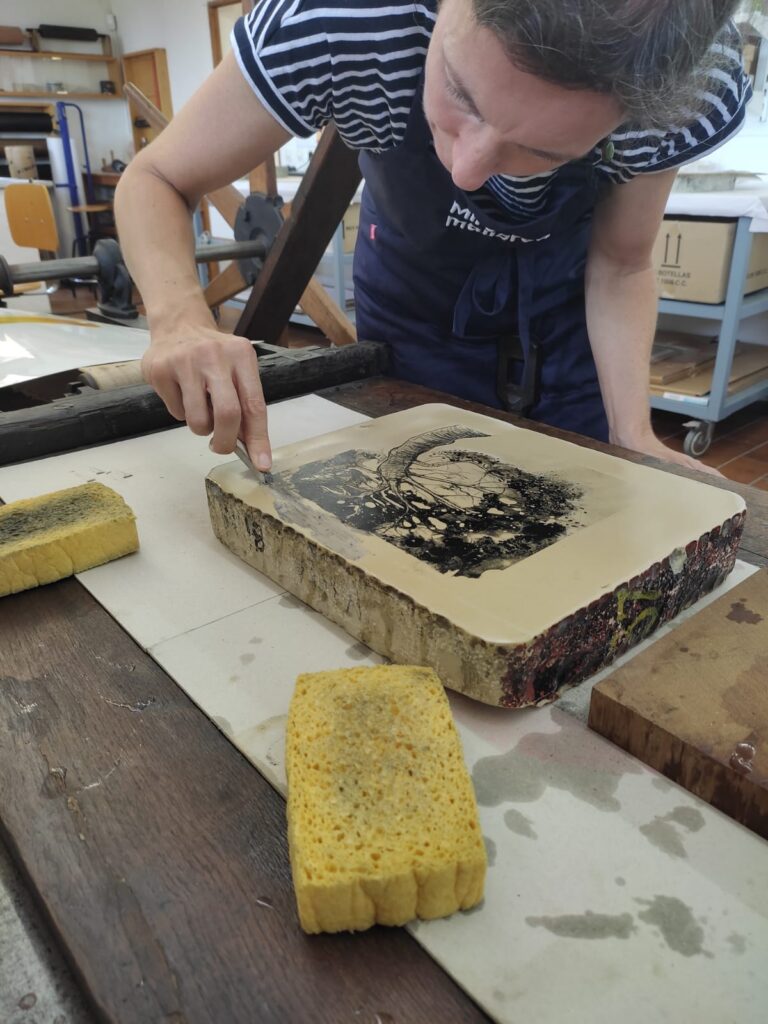
    The developed image had some lovely effects that couldn’t be seen at the drawing phase, and which only appeared once the stone had been prepared for printing. This was down to how the grease moved around the plate (due to the alcohol) and penetrates the stone, even if it’s not visible to the eye. This was a very happy accident, as it added to the sense of movement I was hoping to achieve.
  • Lithography with Elena Carrasco

    Lithography with Elena Carrasco

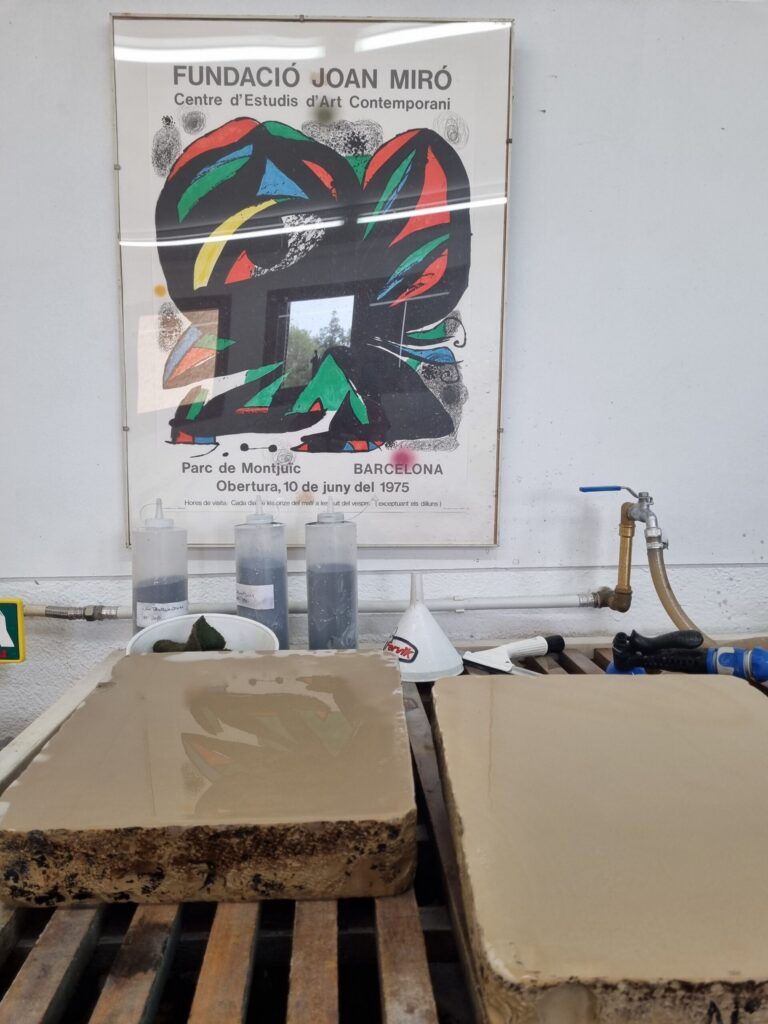
    In July 2024, I returned to Joan Miró’s printmaking workshops (at the Fundació Miró in Palma, Mallorca) to try my hand at stone lithography and aluminium-plate lithography, led by Spanish artist and printmaker Elena Carrasco.

    After studying fine art, Elena decided to focus on printmaking techniques, focusing on lithography specifically. After studying at the Tamarind Institute in New Mexico, she returned to Spain and finally set up her own lithography studio, La Litográfica, in Madrid.

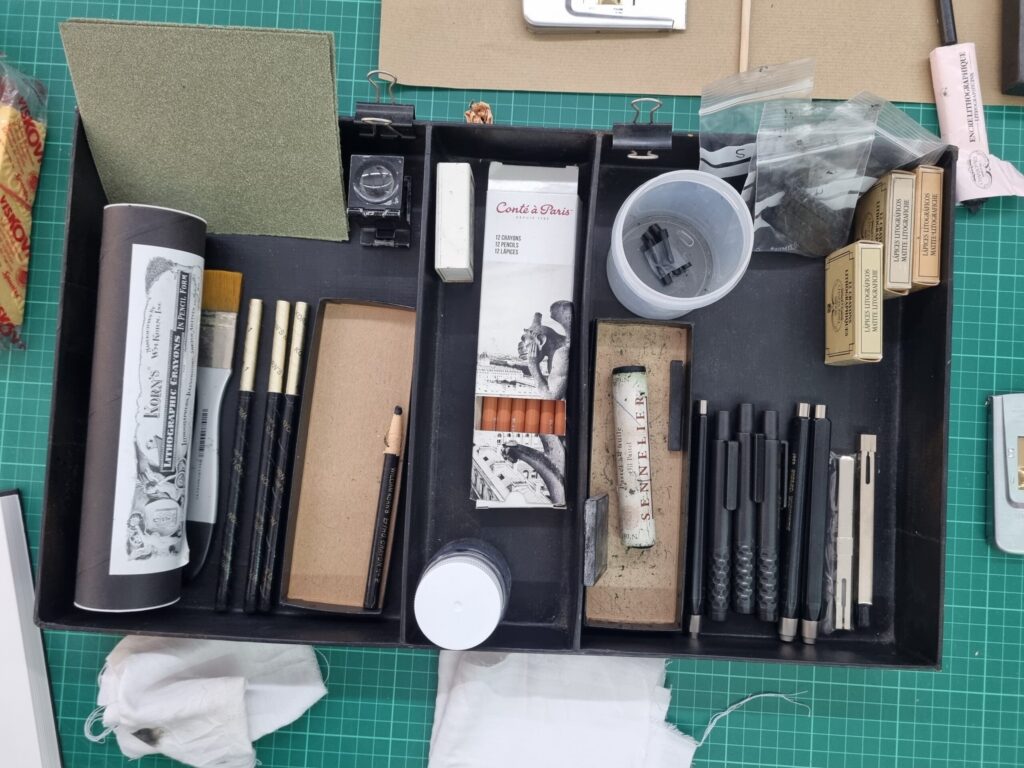
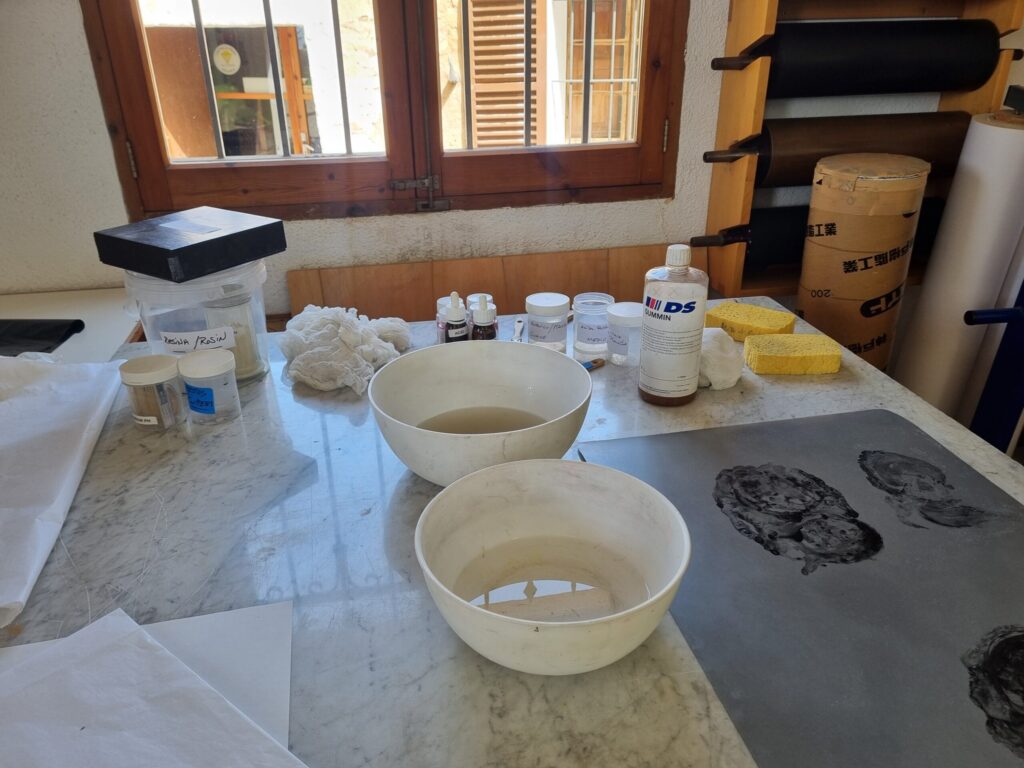
    During the nine-day course, Elena introduced us to lithography on both stone and aluminium. We learnt about the history and theory behind the technique, and then applied our newly acquired knowledge to reproduce our own works on both surfaces.

    The amount of information and the steps involved (lithography is very process heavy, as it turns out) were quite overwhelming to start with. But as we put into practice everything we’d been taught, it all started to come together.

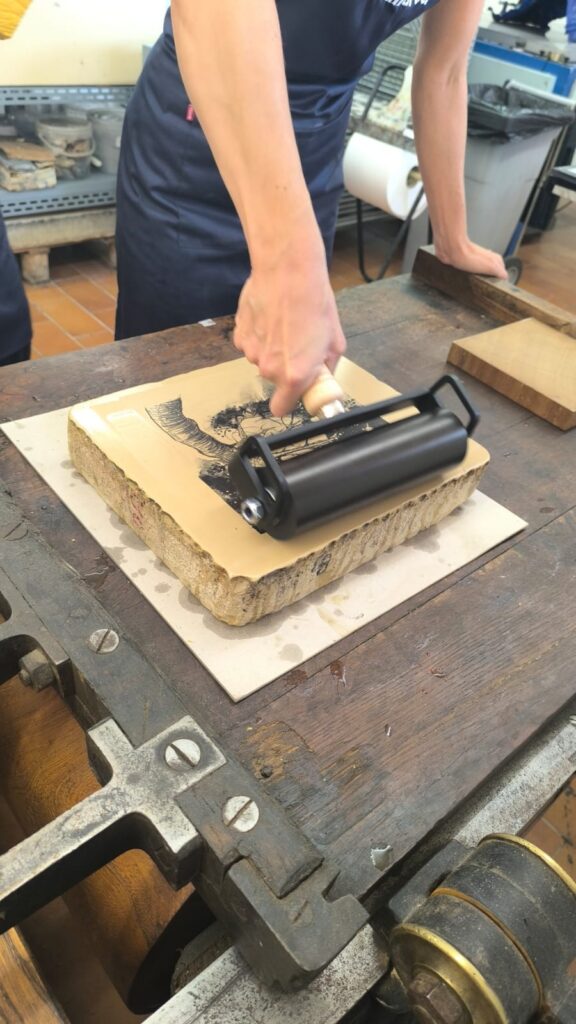
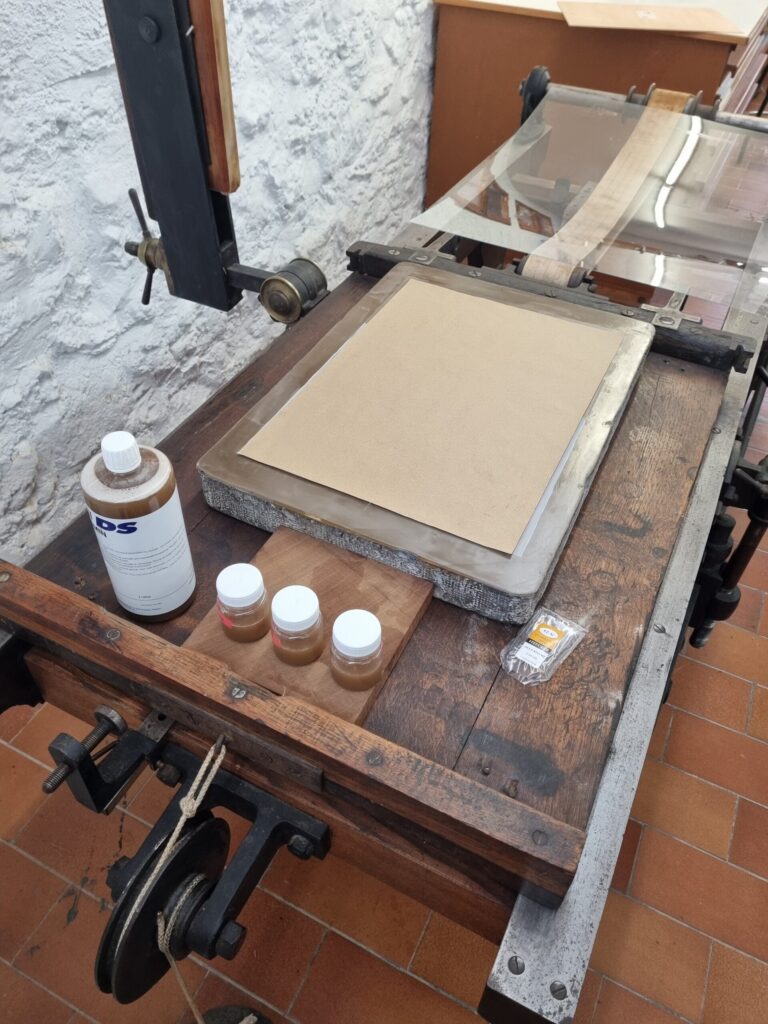
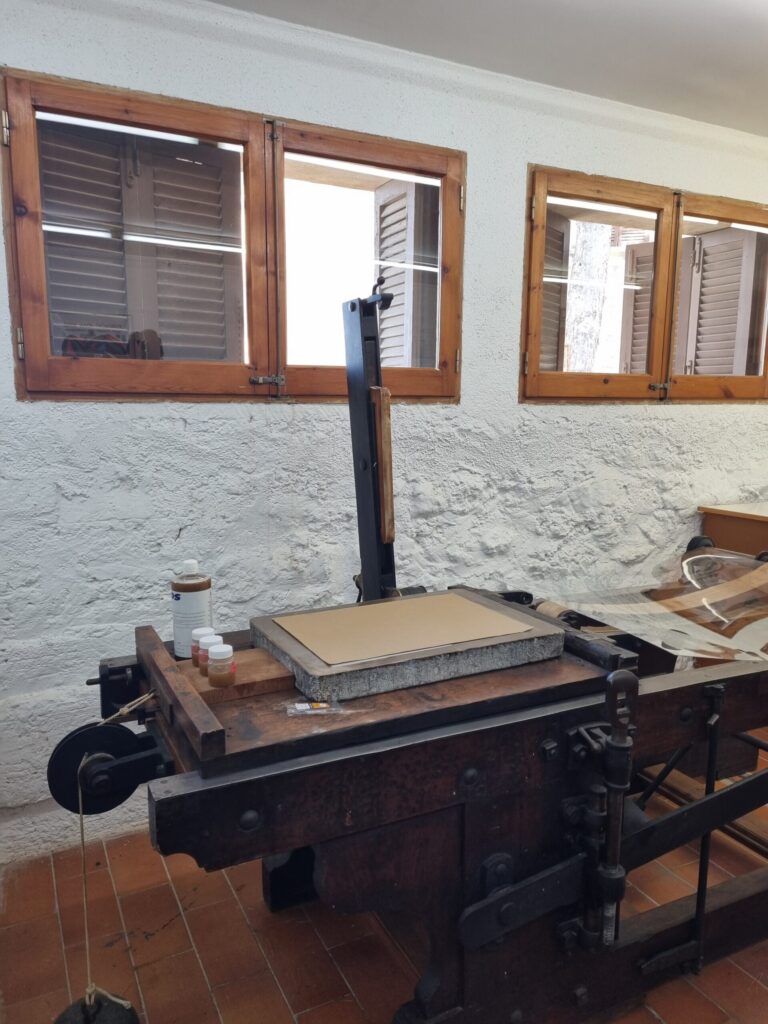
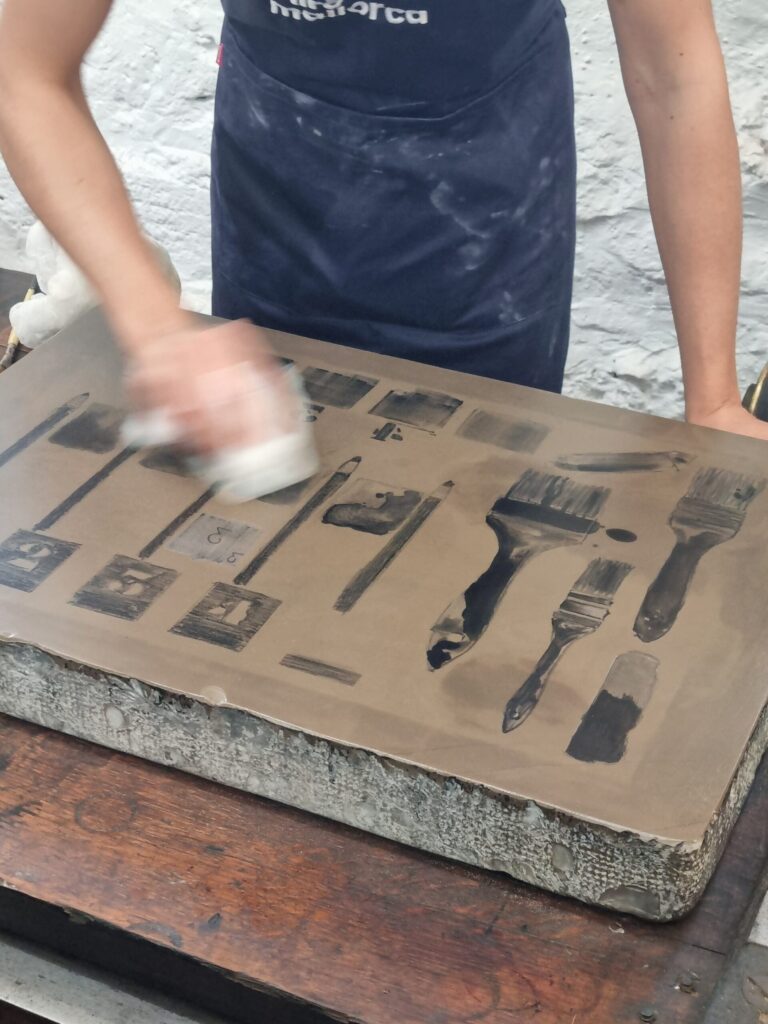
    It was also very special to use the massive but beautiful French wooden lithography press that Miró himself used to print with. The lithographic stones have a wonderfully tactile nature, edges stained with ink as a physical reminder of the artists that have used them before (even though the image has long been removed).

    We discovered that lithography is also a real team effort, from reminding each other of the next step to helping keep the stone damp while inking up between prints. The other thing I’ve loved about both courses I’ve now been on here is the truly supportive and encouraging atmosphere, thanks to both other participants and the course leaders.

    My next posts will reveal what beginner’s luck (and first-class teaching!) helped me to create using stone lithography and aluminium lithography techniques.

  • ‘Mokuhanga’ with Sebi Subirós

    Mokuhanga, or Japanese woodblock, is a traditional form of non-toxic relief printing that uses water-based inks. Catalan artist Sebi Subirós provided an introduction to this special, very skilful technique on a week-long course at Joan Miró’s printmaking workshops in Palma.

    Although I’ve done linoprinting, I hadn’t yet tried my hand at any type of woodcut. We learnt about creating plywood plates using relatively simple traditional Japanese tools and materials, including how to do the image transfer of our original drawing.

    Then, we went on to handprint them using natural pigments (preparing inks manually) and nori paste on Japanese papers; we were able to try out various samples so that we could see the different effects that could be achieved with each.

    Many of the people on the course were working artists and came prepared with their own ideas. While we were all starting from the same point, it was a brilliant opportunity to learn from experienced individuals and how they created their own visions.

    I decided to take inspiration from the immediate grounds around the workshops and chose the 18th-century Mallorcan possessió Son Boter. After creating an ink sketch, I then split the image into three colours and transferred these to separate plates to create a multi-block print (also a first for me!).

    The whole experience was fascinating and a fairly steep learning curve, from transferring the images using nori paste and cutting into the plates using knives and chisels, to creating registration indents called kentos and manually inking up and printing the plates using a baren.

  • Collagraph with Marian Haf

    Collagraph with Marian Haf

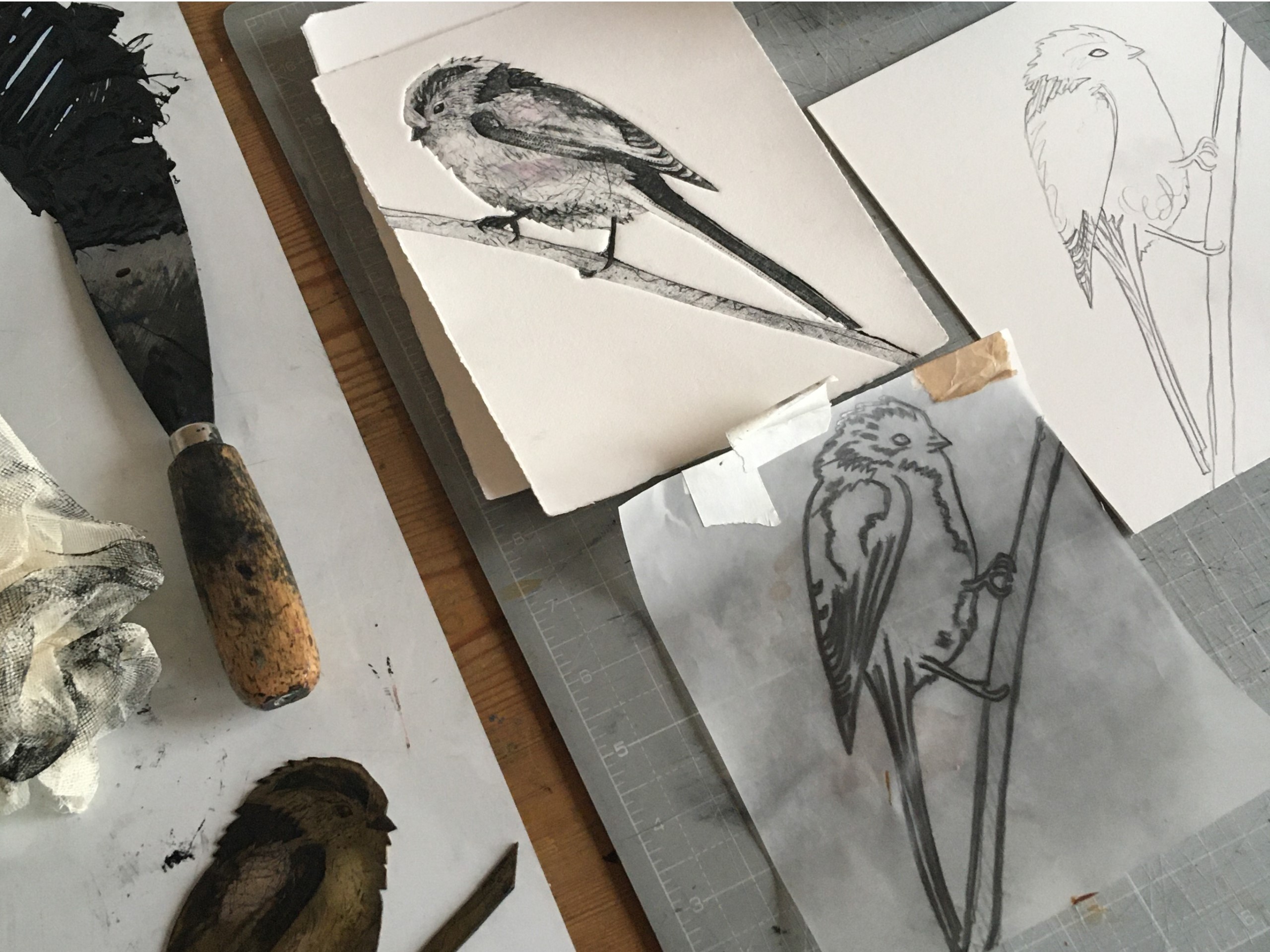
    Living on a small island in the middle of the Mediterranean often makes it tricky to find courses you can actually get to in person. I’ve loved Welsh printmaker Marian’s work and style since I stumbled across her on Instagram, and was excited to see that she offered online tutorials in both relief and intaglio collagraph techniques.

    I had been curious about intaglio printmaking for a while and collagraph seemed to be a good ‘gateway’ technique (as well as being an option for trying out as a relief method as I don’t yet have an etching press). Marian’s work has a painterly look that really appeals to me, too, so she was the obvious person to turn to for an introduction.

    We had a quick chat over email while booking the session, and Marian kindly agreed to adapt the tutorial to cover both collagraph approaches. She usually focuses on either one or the other and sends one of her beautiful bird prints to participants, but as I’m in Spain and the postal service being what it is post-Brexit, this wasn’t possible in my case.

    Ahead of the one-hour video call, Marian sent over an illustrated (very handy to have a visual guide) list of recommended materials. However, I didn’t need these for the tutorial, which was purely going to be an intensive, in-at-the-deep-end demonstration of how she creates collagraph plates and prints them using the two techniques.

    Unsurprisingly, the time whizzed by. Marian was absolutely lovely to speak to and kindly shared her expertise and handy tips based on many years of trial and experimentation in her print studio. Watching her skillfully create the plates was mesmerising and inspiring in equal measure, and left me itching to have a go as soon as I can find someone with an etching press…

    Find out more about Marian and her work on the Studio Cennen website, or on her Etsy page. All photos courtesy of Marian.

  • Screenprinting with Cecilia Segura

    Screenprinting with Cecilia Segura

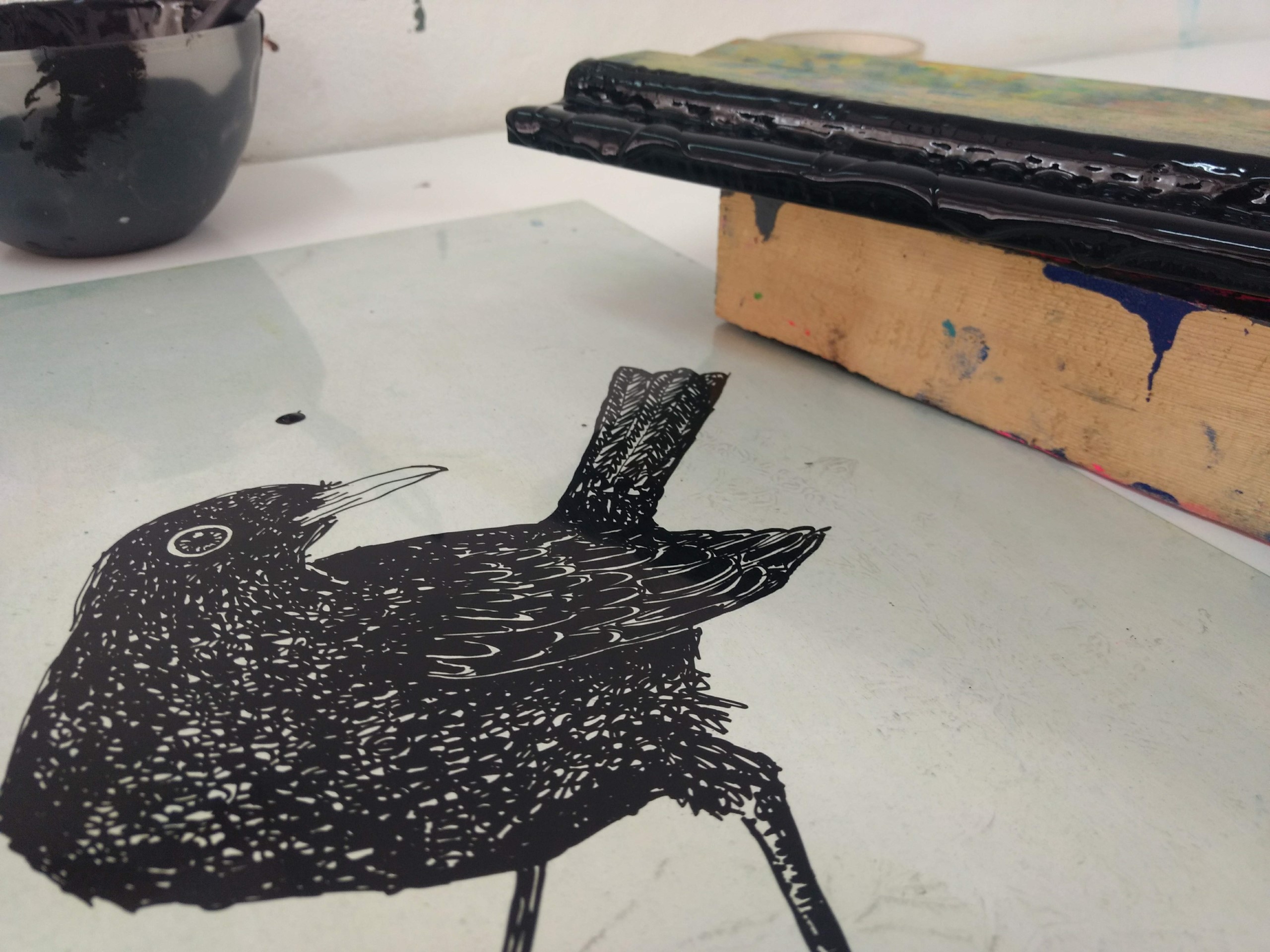
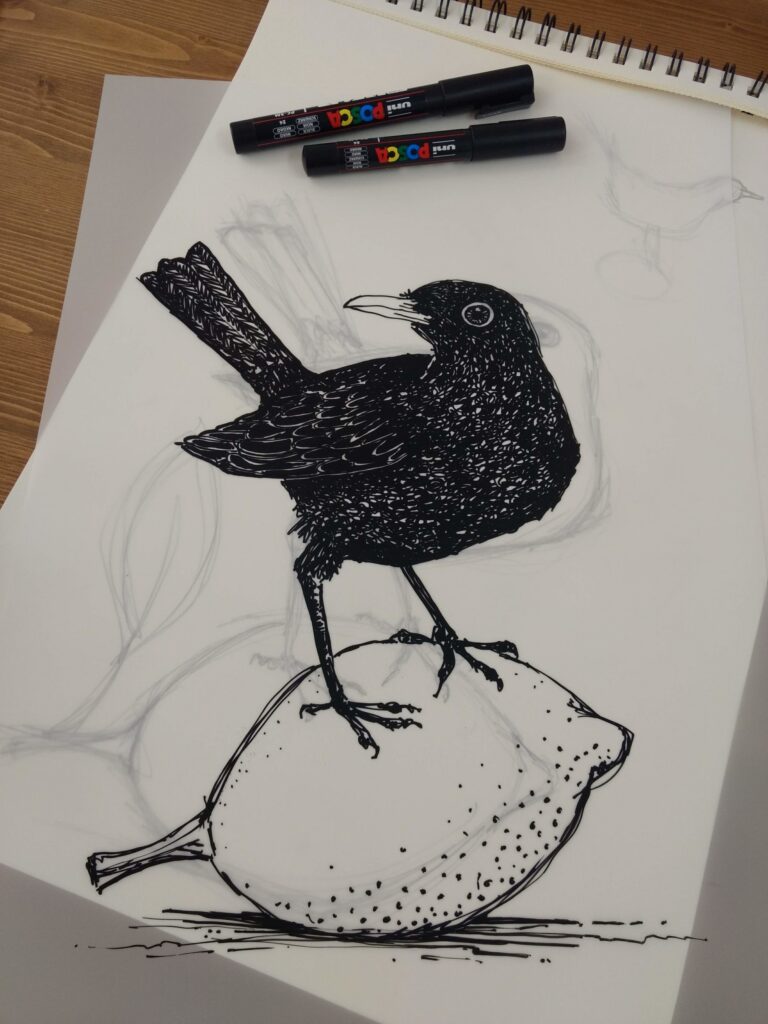
    It’s been a while since I did screenprinting during art classes in sixth form, but I have fond memories of this surface-printing technique and wanted to have another go. So I was really happy to find an intensive, one-to-one screenprinting workshop with multidisciplinary artist Cecilia Segura at the Tony Velonis studio in Palma, Mallorca.

    Over the course of three days, Cecilia took me through the entire process of creating a print on paper using photo emulsion, including transferring the drawing, preparing and exposing the screen, printing multiple colours and editioning the prints. She was incredibly generous with her knowledge and experience, and as a result I created two prints.

    An added bonus was being able to see some of Cecilia’s own prints and her collaborations with other artists whose work she expertly produces by hand as editioned screenprints. It was also lovely to see examples of what other students have produced, some on paper and others on textile.

    Find out more about screenprinting courses at the Tony Velonis printmaking studio (Spanish only).